

Shin Law Office · Leesburg & Fairfax

Nursing Home Abuse and Neglect Attorneys in Northern Virginia

Their dignity matters.
Your concerns deserve answers.

You trusted a facility to care for someone you love. When unexplained injuries, missed care, or changing explanations raise concerns, Shin Law Office helps residents and families examine what happened, preserve the evidence, and understand their legal options.

Resident injuries · Suspected neglect and abuse · Nursing home and assisted living concerns · Fatal harm

Resident dignity and choicesCare and records reviewNorthern Virginia

Immediate safety comes first. Call 911 for immediate danger or a medical emergency. Virginia’s 24-hour APS hotline is 888-832-3858. You can report suspected abuse or neglect before speaking with a lawyer. Do not delay necessary care to collect evidence. See reporting options.

The short answer

When can nursing home neglect support a legal claim?

A claim may exist when a facility or another responsible provider fails to meet an applicable legal duty and that failure causes injury. The review compares the resident’s needs, the care required, the care delivered, and the harm. A concerning outcome deserves attention, but a fall, wound, or decline does not establish liability by itself.

Basic care can be malpractice.Virginia expressly includes many nursing home services in its medical malpractice framework. Understand the distinction.
Reporting and filing differ.An agency complaint does not replace the steps or deadlines for a civil claim. Find the right resource.

Begin with the concern in front of you

A clear next step can start with what you know.

You do not need to diagnose the injury or assemble a complete case before asking for help.

Concerns worth investigating

Look at the pattern, the response, and the resident’s needs.

Changes in appearance, comfort, behavior, or function can have several causes. Prompt clinical attention and specific observations help distinguish a care problem from an assumption.

Pressure wounds & skin injury

A new wound, worsening skin breakdown, or an unexplained delay in treatment may warrant review. Assessments, prevention measures, repositioning records, and the resident’s clinical condition help explain whether care fell short.

What risks were identified, and was the care plan carried out?

Dehydration & nutrition concerns

Significant weight changes or concerns about eating and drinking deserve medical attention. The review may examine assistance at meals, intake records, diet orders, swallowing concerns, clinical restrictions, and the resident’s preferences.

Was the response appropriate to the resident’s assessed needs?

Falls & unsafe transfers

Repeated falls, injuries during movement, or an inconsistent account of an incident may raise questions. Relevant evidence includes risk assessments, staffing assignments, assistance requirements, equipment, and what happened immediately afterward.

Was required supervision or transfer assistance provided?

Medication errors & sedation

Missed doses, unexplained medication changes, or unusual sedation can require clinical evaluation. Orders, administration records, monitoring, pharmacy information, and communication between providers help identify a possible error and its effects.

Do the orders, administration record, and observations agree?

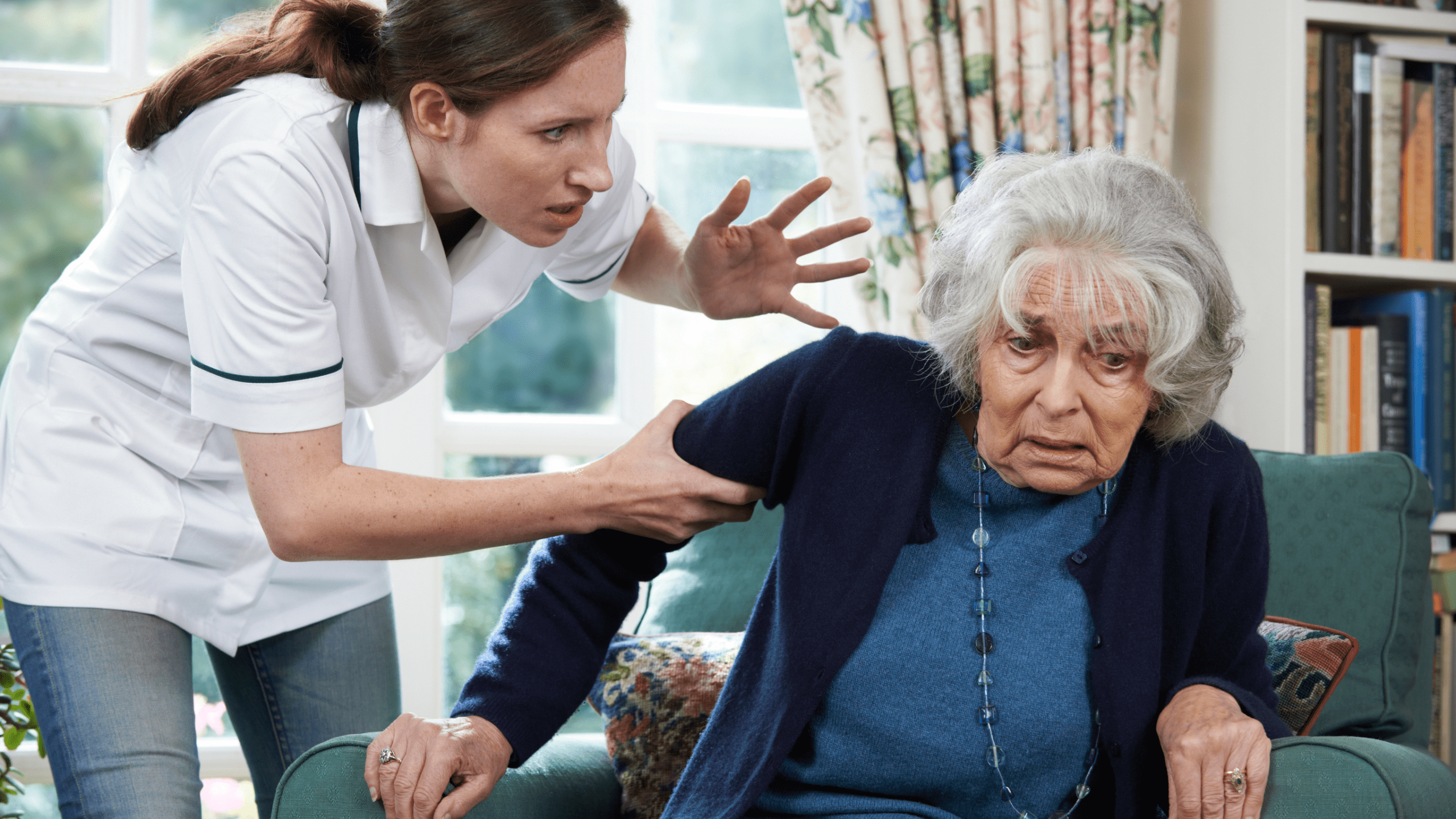
Abuse, threats & improper restraints

Reports of rough handling, humiliation, sexual abuse, coercion, or improper restraints require serious attention. Listen without supplying answers, record the resident’s own account accurately, and seek appropriate protection and reporting help.

What was reported, who knew, and how did they respond?

Missed monitoring & delayed response

Unanswered calls, missed checks, unsafe wandering, or delayed attention to a change in condition can expose a vulnerable resident to harm. Care plans, observation logs, alerts, and transfer records can clarify the sequence.

What change required action, and when was help provided?

Illustrations explain care concerns and do not depict a specific resident, facility, diagnosis, or legal result.

Dementia, serious illness, and hospice require an individual review.

A resident’s underlying condition and goals of care matter. They do not excuse abuse or remove the duty to provide appropriate care. At the same time, deterioration can occur despite appropriate treatment. Medical evidence should address what was preventable, what changed, and whether an identified failure caused additional harm.

42 CFR § 483.25: quality of care in covered nursing facilities (opens in a new tab)

How a civil claim is evaluated

Connect the care failure to the injury.

A careful investigation starts with the resident’s circumstances and the evidence of what actually happened.

The resident’s baseline health, mobility, cognition, medications, and known risks help define the questions. The applicable standard may require assessment, a suitable plan, competent assistance, monitoring, and a timely response to changes. The legal duties depend on the provider, setting, and services involved.

We then examine whether the actual care met that standard. A written plan is useful, but the investigation also considers whether staff followed it, recognized new risks, communicated concerns, and obtained needed help.

Causation needs separate attention. A claim must connect the proven failure to an injury or worsening condition. Preexisting illness, unavoidable complications, the resident’s informed choices, and other possible causes should be addressed directly.

Connect the required care, the care delivered, and the resulting harmThree parts of a civil investigation are the applicable care standard, evidence of a failure to meet that standard, and a causal connection to the resident’s injury. A concerning outcome by itself does not answer all three questions. 123 Required careCare deliveredResulting harm Assess needs and the applicable standard.Compare the plan with the actual care.Connect a proven failure to the injury. The outcome starts the inquiry.
Records, witness accounts, and qualified expert analysis can help distinguish a preventable care failure from an outcome that occurred despite appropriate care.
Virginia’s Medical Malpractice Act

Basic nursing care can be professional care.

Virginia expressly includes patient-care staffing, hygiene, hydration, nutrition, fall assessments and interventions, monitoring, and other nursing home services within its professional-services definition. Calling a claim “ordinary neglect” does not determine which legal rules apply.

Classification can affect expert requirements, damages limits, and case preparation. Intentional abuse, other conduct, and other facility types require their own analysis.

§ 8.01-581.1: health care and nursing home professional services (opens in a new tab)

Expert review and case preparation

Obtain the necessary support early.

In a medical malpractice action, Virginia generally requires the necessary signed written expert opinion to exist when the plaintiff first requests service of process or asks a defendant to accept service. The opinion addresses departure from the standard and causation. A narrow common-knowledge exception exists.

Requesting records and arranging qualified review takes time. The exception should not be assumed simply because the care failure appears obvious to a family.

§ 8.01-20.1: expert certification (opens in a new tab)

Identify the responsible people and entities.

The facility’s operator, a treating provider, a staffing company, or another participant may have different duties. Ownership, employment, control, contracts, and the actual conduct matter. A shared brand, corporate connection, staffing concern, or inspection citation does not automatically establish every entity’s liability.

The setting changes the analysis

Confirm the license, the provider, and the care involved.

“Senior living,” “rehabilitation,” and “memory care” do not answer every legal or regulatory question.

SettingWhat to identifyWhy it matters
Nursing homeThe licensed operator, involved providers, and Medicare or Medicaid certification.Virginia nursing home rules apply; participating facilities also face federal nursing-facility requirements.
Assisted livingThe DSS license, assessed needs, service plan, and any separately involved clinicians.Assisted living has a separate licensing and resident-rights framework. Particular health care claims still need classification.
Memory careThe underlying license and the unit’s supervision, services, and assessed resident needs.The label alone does not show whether nursing home, assisted living, or other rules govern.
Short-term rehabilitationWhether care occurred in a nursing facility, hospital, or another licensed setting.The location and provider help determine the applicable standards and complaint route.

Virginia DSS: assisted living and nursing home distinctions (opens in a new tab) · VDH: facility complaint jurisdiction (opens in a new tab)

Resident rights

Safety, dignity, and a voice in care.

Moving into a facility does not erase a resident’s individuality, choices, or right to raise concerns.

Dignity & freedom from abuse

Virginia’s nursing home rights include respectful treatment, privacy, and freedom from mental and physical abuse. Restraints are subject to legal limits. Assisted living law separately addresses abuse, exploitation, degrading treatment, and neglect of known needs.

Information & participation

Residents have rights involving information about services, charges, and care, as well as participation in planning. Capacity, consent, and the scope of a representative’s authority matter. Family involvement should support the resident’s lawful choices.

Complaints & privacy

Residents can raise grievances without reprisal. Confidential records, private communication, and other protections also matter. A complaint should identify the specific concern and requested response while preserving the resident’s privacy.

§ 32.1-138: nursing home resident rights (opens in a new tab) · § 63.2-1808: assisted living resident rights (opens in a new tab)

Take a threatened discharge or retaliation seriously.

Save the written notice and note when it arrived. Transfer and discharge can involve separate permitted grounds, notice requirements, and review procedures. Ask the appropriate regulator, ombudsman, or counsel for prompt guidance. A complaint does not authorize retaliation, but it also does not prevent every lawful transfer. Plan for the resident’s continuing care and safety.

Reporting suspected abuse or neglect

Get the right help for the immediate concern.

You do not have to finish a legal investigation before reporting suspected mistreatment.

For immediate danger or a medical emergency, call 911. When making a report, provide the resident’s location, the concern, when it happened, and any current safety or medical needs. Separate what you observed from what someone else told you.

Protective services, licensing agencies, and the long-term care ombudsman have different responsibilities. More than one route may be appropriate. An internal complaint can document the concern, but it should not delay emergency care or a report to the appropriate public agency.

A civil claim addresses legal responsibility and recoverable losses through a separate process. An agency finding may be relevant, but it does not automatically prove or defeat that claim.

Resident safety, agency reporting, and a civil claim serve different purposesUrgent care addresses immediate safety. Protective services and regulators address reports and compliance. A civil claim requires separate investigation of responsibility and recoverable losses. These efforts may proceed together, and reporting does not by itself stop a civil filing deadline. Immediate safetyReporting & advocacyCivil claim Emergency response and needed care.Protection, compliance, and resident rights.Responsibility and recoverable losses. Different roles. Separate filing requirements.
Protection, regulatory review, advocacy, and civil compensation serve different purposes. Preserve report numbers and responses for the legal review.
Nursing home licensing and certification

Virginia Department of Health

VDH’s Office of Licensure and Certification investigates complaints involving nursing homes and other facilities within its jurisdiction. Its complaint page provides the current submission process and explains which concerns belong with another agency.

File a nursing home complaint with VDH (opens in a new tab)

Resident advocacy and care concerns

Long-Term Care Ombudsman

The ombudsman can help residents and authorized representatives understand rights and work through care or quality-of-life complaints. Its role is advocacy, guided by resident consent and preferences. It does not serve as a licensing enforcement agency or award civil damages.

Northern Virginia ombudsman services and contacts (opens in a new tab)

Evidence and records

Build a timeline while the details are available.

Specific dates, observations, and original records can help resolve conflicting accounts.

Begin with a short chronology: admission, baseline condition, the first concerning change, requests for help, the facility’s response, and any hospital transfer. Identify who was present and keep the exact words of important statements when you can recall them accurately.

Save messages, photographs taken with appropriate consent, admission papers, bills, complaint responses, and records already provided. Keep original files and their dates. Avoid editing photographs or circulating private medical information unnecessarily.

Counsel can evaluate preservation requests for relevant video, electronic records, call-system logs, staffing assignments, and other evidence that may not remain available indefinitely. Availability, access, privilege, and relevance vary. A family should not assume it can obtain every internal document on demand.

Build a timeline from the resident’s condition, care plan, delivered care, and responseFour evidence groups help explain what happened: baseline health and risks, assessments and orders, treatment and staffing records, and the response to a change in condition. Preserve relevant originals and obtain records through authorized channels. Baseline health& risksAssessments& ordersTreatment& staffing recordsChange& response Build the care timeline.Compare the records with the observations.
Look for the sequence of assessment, planned care, care delivered, a change in condition, and the response. Gaps and inconsistencies require investigation.

Clinical and care records

  • Admission assessments, risk screens, care plans, and updates.
  • Nursing notes, medication and treatment administration records, and provider orders.
  • Wound documentation, nutrition records, weights, monitoring logs, and therapy records.
  • Emergency, hospital, transfer, and discharge records that explain the subsequent course.

Context and communication

  • Dated family observations, messages, names, and witness contact information.
  • Admission contracts, arbitration papers, and representative-authority documents.
  • Available incident information, complaints, survey findings, and facility responses.
  • Bills, added care expenses, and records supporting the practical effects of the injury.

§ 8.01-379.2:1: preservation of evidence (opens in a new tab)

Authority and privacy affect records access.

Requests should come from the resident or a person with appropriate authorization. A health care agent, financial agent, guardian, or family member may have different powers. The actual documents, the resident’s capacity, and applicable law must be checked. Do not take other residents’ information or access facility systems without permission.

Who can act for the resident?

Review the authority before making legal decisions.

Being the person a facility calls first does not automatically authorize every legal step.

A resident who can make the relevant decision should remain involved. When someone else must act, the powers granted in a valid document or court order need review. Medical decision-making authority, records access, financial authority, and authority concerning litigation are related but distinct questions.

Bring any power of attorney, advance directive, guardianship or conservatorship order, and amendments. A dementia diagnosis alone does not answer every capacity question. If the resident has died, the claim and the authority of a personal representative require separate review.

Admission paperwork and arbitration

A signature calls for review, not assumptions.

An arbitration provision may affect the forum and process for resolving a claim. Its legal effect depends on the agreement and circumstances.

Preserve the complete admission packet, attachments, electronic signing records, and any later amendments. Note who signed, in what capacity, what authority existed, what was explained, and the dates.

For nursing facilities subject to the federal rule, binding arbitration cannot be made a condition of admission or continued care. The agreement must include a right to rescind within 30 calendar days of signing. The regulation also addresses explanation, understanding, and communications with public officials.

These requirements do not mean every signed agreement is automatically valid or invalid. Have counsel assess enforceability, applicable law, timing, and the appropriate response before assuming the claim is over or sending a legal notice.

42 CFR § 483.70(m): binding arbitration requirements (opens in a new tab)

Review a release separately.

A settlement release, refund agreement, or other proposed resolution may have consequences beyond the immediate payment. Understand the parties released, the claims covered, confidentiality terms, fees and costs, and any reimbursement obligations.

The person signing must have the necessary authority. Certain settlements involving a death or a person under a legal disability can require additional court procedures. Do not treat a facility’s proposed paperwork as a routine administrative form.

Virginia filing deadlines

Do not wait for every question to be answered.

Records requests, clinical review, and legal preparation need time. The correct deadline depends on the claim and the actual dates.

Personal injury

Generally two years.

Virginia generally provides a two-year personal injury limitations period. Accrual rules usually focus on when the injury occurred, not when the family first recognized a possible care failure. Certain malpractice circumstances have specific statutory extensions.

Capacity and exceptions

Review the legal facts.

Legal disability and other tolling provisions require a case-specific analysis. A dementia diagnosis, inability to speak, or a relative’s delayed discovery does not automatically stop the clock. The timing of incapacity and a fiduciary appointment may matter.

A death related to the care

Check both timelines.

Wrongful death actions generally have a two-year period after death, subject to statutory rules and exceptions. Death should not be assumed to revive an injury claim that was already time-barred. Review the care, injury, death, and any prior filing dates together.

§ 8.01-243: injury and malpractice limitations (opens in a new tab) · § 8.01-230: accrual (opens in a new tab) · § 8.01-229: tolling provisions (opens in a new tab) · § 8.01-244: wrongful death limitations (opens in a new tab)

Injuries and recoverable losses

Document how the harm changed the resident’s life.

A damages assessment should follow the evidence of the injury, treatment, daily limitations, and future needs.

Medical expenses

Emergency care, hospitalization, wound treatment, rehabilitation, medication, and other necessary expenses may be relevant when connected to the actionable injury. The records should distinguish the effects of the injury from unrelated treatment.

Additional care needs

A resident may need more assistance, equipment, or a different level of care. Future expenses require appropriate medical and financial support. A general estimate is not a substitute for evidence of what the resident is likely to need.

Pain and loss of function

Physical pain, mental suffering, and the injury’s effects on everyday life may be recoverable under the applicable law. Clinical records and observations can help explain harm when communication is difficult. Advanced age does not erase those losses.

Other supported losses

Financial effects depend on the resident’s circumstances and the claim. Keep bills, receipts, benefit statements, and expense records. Family concern alone does not make every relative a claimant or every expense a recoverable damage.

Virginia’s malpractice cap may limit the total recovery.

If the Medical Malpractice Act governs, the statutory total-recovery limit must be considered. Its amount depends on the date of the alleged act or acts, rather than simply the date a lawsuit is filed. A cap is a legal ceiling, not a settlement estimate or a promise of available insurance.

Any proposed resolution also requires review of fees, costs, liens, reimbursement interests, and the release. Liability, medical causation, coverage, and collectability can affect the practical outcome.

§ 8.01-581.15: medical malpractice recovery limits (opens in a new tab) · Virginia Civil Jury Instructions: causation and damages (opens in a new tab)

When a resident has died

A family’s loss deserves a careful causal review.

A death after a care concern does not establish the cause on its own, but it warrants attention when the evidence suggests preventable harm.

Virginia wrongful death claims generally proceed through a properly qualified personal representative for the statutory beneficiaries. A family relationship or an earlier power of attorney should not be assumed to supply the required authority after death.

The investigation must connect the actionable conduct to the death. Hospital records, the course of care, death documentation, and qualified expert review may matter. Preserve available materials without delaying necessary family arrangements.

Learn about Virginia wrongful death claims

How Shin Law Office approaches the review

Start with the resident. Build from the evidence.

We help families organize their concerns and understand the decisions involved in a potential claim.

  1. 01

    Listen and identify urgency.

    Review current safety, the resident’s condition, key dates, authority to act, and any notices or paperwork needing attention.

  2. 02

    Preserve and investigate.

    Identify the relevant records, potential defendants, care standards, chronology, and evidence that may be lost.

  3. 03

    Evaluate the supported claim.

    Assess clinical causation, necessary expert review, legal classification, recoverable losses, defenses, and filing requirements.

  4. 04

    Explain the available path.

    Discuss the evidence, risks, representation terms, and options for a demand, negotiation, arbitration, or litigation when appropriate.

Anthony I. Shin, Esq., principal of Shin Law Office

Meet the firm

Anthony I. Shin, Esq.

Principal · Shin Law Office

Questions about a loved one’s care can be difficult to separate from grief, worry, and conflicting explanations. Shin Law Office helps residents and families turn those concerns into a focused review of the facts and legal options.

Ask how communication will work and what the proposed engagement covers. Attorney fees, expert expenses, and other case costs should be addressed in the written representation terms.

Meet Anthony Shin

Northern Virginia consultations

Offices in Leesburg and Fairfax.

Serving residents and families in Loudoun County, Fairfax County, Arlington, Alexandria, and Prince William County.

Begin with the facility’s location, the dates of care, the resident’s current situation, and the concern you want reviewed. If you live elsewhere but your loved one received care in Northern Virginia, those details can help identify the applicable law and next steps.

Leesburg

118 Edwards Ferry Road, N.E.
Unit 110
Leesburg, VA 20176

Fairfax

8300 Arlington Boulevard
#B2
Fairfax, VA 22031

Nursing home abuse and neglect FAQs

Clear answers for concerned families.

Warning signs, reporting, resident rights, records, arbitration, and Virginia legal claims.

General information about Virginia law. The resident’s circumstances, provider, facility license, documents, and dates can change the analysis.

What are warning signs of nursing home abuse or neglect?

Unexplained injuries, new or worsening pressure wounds, missed care, significant weight changes, repeated falls, unusual sedation, fear around a caregiver, or unanswered requests for help can justify concern. A warning sign is not a diagnosis or proof of liability. Seek appropriate medical attention, record specific observations and dates, and report suspected abuse or neglect without waiting to prove a civil case.

Does a bedsore automatically mean the nursing home was negligent?

No. The investigation should examine the resident’s risks, assessments, prevention plan, care actually delivered, changes in condition, and treatment response. Applicable federal rules address prevention and treatment while recognizing that some pressure ulcers may be clinically unavoidable. A qualified clinical review can help determine whether a departure from the required care caused or worsened the wound.

Can a nursing home be responsible for a resident’s fall?

Potentially. Relevant questions include the known fall risk, care plan, supervision, transfer assistance, equipment, prior incidents, and response after the fall. A facility does not guarantee that every fall can be prevented. A claim needs evidence of a legally significant failure and a causal connection to the injury, rather than the fall alone.

Can a resident with dementia or receiving hospice care have a claim?

Yes, depending on the evidence. Dementia, serious illness, or hospice enrollment does not remove the right to appropriate care and freedom from abuse. The resident’s condition, choices, goals of care, and clinical risks still matter when assessing causation. A decline may have several explanations, and a dementia diagnosis does not automatically determine legal capacity or extend a filing deadline.

Who should I call if I suspect nursing home abuse in Virginia?

Call 911 for immediate danger or a medical emergency. Virginia’s 24-hour Adult Protective Services hotline is 888-832-3858 for suspected abuse, neglect, or exploitation of an adult age 60 or older, or an incapacitated adult age 18 or older. Nursing home complaints may also go to the Virginia Department of Health. Assisted living licensing complaints go to the Department of Social Services. You do not need a lawyer before reporting.

Will an APS or licensing complaint obtain compensation for the resident?

A protective-services report or licensing complaint serves a different purpose from a private damages claim. Agencies may investigate protection needs or regulatory compliance. An ombudsman can help advocate for resident rights but does not enforce licensing rules or award damages. A civil claim requires its own review, proof, and filing steps. Reporting does not by itself suspend a civil deadline.

Are assisted living and memory care facilities treated like nursing homes?

Not in every respect. Virginia licenses nursing homes and assisted living facilities through different agencies and provides separate resident-rights statutes. Memory care describes services and does not by itself identify the license. Determine the facility’s legal status, the provider involved, and the care at issue. Federal nursing-facility requirements do not automatically apply to every senior living community.

What rights do Virginia nursing home residents have?

Virginia law protects rights involving dignity, privacy, participation in care, information, confidential records, freedom from abuse, and complaints without reprisal. Assisted living residents have a separate statutory rights framework. The details and any lawful limitations depend on the setting and circumstances. A rights concern may warrant intervention or a complaint, but it does not automatically establish a private damages claim.

What records should our family preserve?

Keep admission and arbitration papers, care plans you received, messages, dated observations, photographs taken with appropriate consent, hospital and transfer records, bills, and complaint reference numbers. Authorized requests may also seek assessments, nursing notes, medication records, wound documentation, and relevant care logs. Access depends on consent, legal authority, and applicable protections. Preserve originals without editing them or obtaining another resident’s private information.

Can I bring a claim on behalf of my parent or spouse?

The resident’s ability to act and the proposed representative’s authority must be reviewed. A power of attorney, guardianship order, or another lawful arrangement may matter, but being a relative or an emergency contact does not automatically authorize every records request or lawsuit. Bring the actual documents. If the resident has died, a wrongful death action generally must be brought by a properly qualified personal representative.

Is nursing home neglect considered medical malpractice in Virginia?

Many claims are. Virginia’s statutory definition of professional nursing home services includes patient-care staffing, hygiene, hydration, nutrition, fall assessments and interventions, monitoring, and other care. A claim about those services may fall under the Medical Malpractice Act even if the family describes it as basic neglect. Other conduct or facility types may require a different analysis. The facts determine the classification.

Will a nursing home malpractice claim require an expert opinion?

Usually, medical malpractice allegations require qualified expert support on the care standard and causation. Virginia generally requires the necessary signed written opinion to have been obtained when the plaintiff first requests service of process or asks a defendant to accept service. A narrow common-knowledge exception exists. Records and expert review should begin early enough to address the requirement and the filing deadline.

Can we pursue a claim if an arbitration agreement was signed?

Possibly. The agreement may affect where and how a claim is decided, and its terms, signing date, and the signer’s authority need review. For nursing facilities subject to the federal rule, arbitration cannot be required as a condition of admission or continued care, and the agreement must provide a 30-calendar-day right to rescind. A signed agreement is not automatically enforceable or automatically invalid.

How long do we have to file a Virginia nursing home injury lawsuit?

Virginia generally provides two years for a personal injury action, measured under the applicable accrual rules. Do not assume the period begins when the family discovers a care problem. Specific malpractice extensions, legal disability, death, and other circumstances can change the analysis. Complaints, facility investigations, or settlement discussions do not by themselves protect the deadline. Have the actual dates and records reviewed promptly.

What compensation may be available, and is there a cap?

A supported injury claim may seek medical expenses, additional care needs, pain, and other legally recoverable losses caused by the wrongdoing. Future losses need appropriate proof. If the Medical Malpractice Act applies, Virginia’s total-recovery cap may limit the award; the applicable amount depends on the date of the alleged malpractice. The cap is not a promised settlement value or proof that insurance is available.

What if suspected nursing home neglect caused a death?

A Virginia wrongful death claim requires evidence connecting the legally actionable conduct to the death and is generally brought by the decedent’s personal representative for statutory beneficiaries. Recoverable categories and distribution follow Virginia law. The general wrongful death filing period is two years after death, subject to claim-specific rules and exceptions. Obtain prompt review of the treatment, death, estate, and earlier injury dates.

What if we fear retaliation or the facility threatens discharge?

Document the concern, preserve the written notice, and seek prompt help from the appropriate regulator, ombudsman, or legal counsel. Virginia resident-rights laws protect complaints without reprisal, and transfer or discharge can involve separate grounds, notices, and procedures. Do not assume a threatened discharge is lawful or that every transfer is prohibited. Immediate safety and continuity of medically necessary care remain priorities.

What should I bring to a consultation with Shin Law Office?

Begin with the facility name, key dates, the resident’s current situation, a short account of your concerns, and the documents you already have. Include any power of attorney, guardianship or estate papers, admission agreement, arbitration terms, medical records, and complaint responses. You do not need a complete file to ask about review. Discuss the proposed representation, attorney fees, expert expenses, and other costs in writing.

Virginia nursing home claim and reporting sources

Sources checked September 29, 2026. Federal nursing-facility rules apply to covered facilities. State requirements, claim classification, authority, dates, and the facts of the care can affect the analysis.

This page provides general legal information, not advice about a particular claim. Legal options and outcomes depend on the facts and applicable law. Contacting Shin Law Office does not, by itself, create an attorney-client relationship; representation begins only after the firm agrees to an engagement.

Reproduction of any content on this site is prohibited except for individual, non-commercial, informational use. This limited permission does not allow modification, distribution, or incorporation of any content into other works or publications in any medium. You may not reproduce or distribute content from this site to any third party.

Copyright © 2026 Shin Law Office, PLC. All rights reserved.

Powered by HILARTECH, LLC

Copyright © 2026 Shin Law Office, PLC. All rights reserved.

Reproduction of any content on this site is prohibited except for individual, non-commercial, informational use. This limited permission does not allow modification, distribution, or incorporation of any content into other works or publications in any medium. You may not reproduce or distribute content from this site to any third party.
