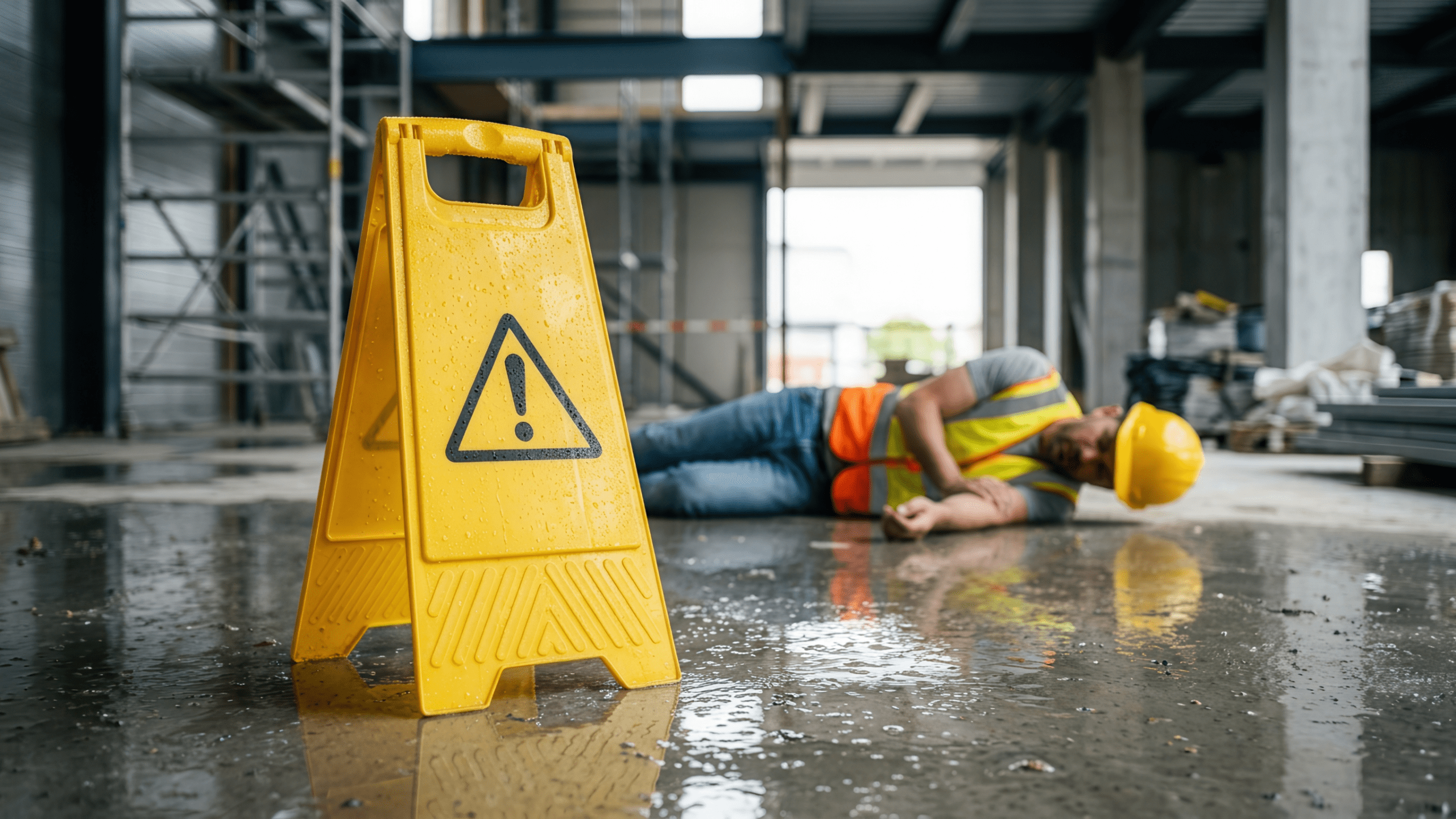
Premises Liability Attorneys in Northern Virginia

A Property Owner Ignored a Hazard. You Paid the Price.

A wet floor, a broken step, a dark stairwell. When a property owner ignores basic safety, we hold them accountable for the injuries that follow, across Northern Virginia.

Owners Have a Duty

The Case Turns on What the Owner Knew

Notice
Owner knew or should have known of the hazard
2 Years
Virginia deadline to file
1% Bars All
Contributory negligence is a real hurdle

Sources: Code of Virginia § 8.01-243; Virginia premises liability law.

A slip-and-fall case is not about the fall, it is about the hazard and what the owner knew. To win in Virginia, we generally have to show the owner created the danger or knew about it, or should have, and failed to fix it. And because any shared fault can bar recovery, the how and why matter enormously.

It Is Not Just a Fall. It Is a Hazard That Should Not Have Been There.

Serious falls are not clumsy accidents; they are the predictable result of a hazard someone failed to fix: a spill left for hours, a step that was never repaired, a stairwell with no light, or ice that no one salted.

Virginia premises liability law turns on duty and notice. A property owner owes visitors reasonable care, and we generally must show that the owner created the hazard, knew or should have known about it, and did nothing. Proving that requires prompt evidence: incident reports, surveillance footage, maintenance logs, and witnesses.

We move quickly to preserve that proof, and we counter the owner’s favorite defense, that you should have watched where you were going, with the facts about what they failed to do.

Schedule a Consultation

When to Call Us

  • You fell on a wet, icy, or cluttered floor
  • A broken step or railing gave way
  • Poor lighting hid a hazard you could not see
  • A store or landlord ignored a known danger
  • You were hurt and the owner is blaming you
  • Surveillance or incident reports may exist but could be erased
What We Handle

Premises Liability Cases We Handle

We prove the owner’s notice and duty and counter the blame-the-victim defense.

Wet & Slippery Floors

Spills and freshly mopped areas left without warning.

Broken Stairs & Railings

Structural defects an owner failed to repair.

Ice & Snow

Walkways and lots left untreated after a storm.

Poor Lighting

Dark stairwells and lots that hide real hazards.

Falling Objects

Merchandise or debris that injures customers.

Notice & Evidence

Securing the reports and video that prove what the owner knew.

Why Fall Victims Choose Us

We Prove Notice

We show the owner knew, or should have known, and did nothing.

We Move on the Video

Surveillance and incident reports vanish. We demand them fast.

We Counter the Blame

Virginia’s fault rule invites victim-blaming. We answer it with proof.

We Value the Injury

Falls cause fractures, head injuries, and worse. We pursue the full cost.

What to Expect

How Working With Us Begins

1

Free Consultation

Tell us what happened. We listen, explain the legal theory that fits, and lay out your options, at no cost.

2

Investigate & Build

We gather evidence, secure records, consult experts, and document the full extent of your injuries and losses.

3

Demand & Negotiate

We present a documented demand and negotiate hard, refusing the lowball offers insurers count on you to accept.

4

Settle or Try It

We push for a full recovery and are fully prepared to take your case to a jury if that is what justice requires.

Anthony I. Shin, Esq., founder of Shin Law Office
Attorney Insight

“The defense in almost every fall case is the same: you should have been watching where you were going. Virginia’s fault rule makes that defense powerful, because if they pin even a little blame on you, your claim can disappear. So I do not let the case become about the fall. I make it about the hazard. Why was the spill there for an hour? Where was the wet-floor sign? When was that step reported and ignored? The store’s own incident report and video usually tell the story, if we demand them before they are gone.”

Anthony I. Shin, Esq.
Founder, Shin Law Office
Common Questions

Answers Before You Call

Is the property owner automatically responsible for my fall?
No. We generally must show the owner created the hazard or knew, or should have known, about it and failed to address it. Proving that notice is the heart of the case.
The store says I should have seen the hazard. Does that defeat my claim?
It is their standard defense, and Virginia’s contributory negligence rule makes it serious. We counter it with evidence about what the owner failed to do, which keeps the focus where it belongs.
What evidence matters most?
Surveillance video, incident reports, maintenance and cleaning logs, and witness accounts. Much of it can be erased quickly, so we move fast to preserve it.
I fell at an apartment I rent. Can I still have a claim?
Possibly. Landlords owe duties for common areas and certain conditions. We examine the lease, the location, and who was responsible for upkeep.
How long do I have to file?
Generally two years in Virginia, with exceptions. Early action helps secure the video and reports before they disappear.
What does it cost?
The consultation is free and these cases are handled on contingency, so there is no fee unless we recover.

Hold the Property Owner Accountable

A hazard that should have been fixed left you injured. We prove what the owner knew and pursue the full cost. Serving injured people across Northern Virginia.

Prefer to talk now? Reach Anthony I. Shin, Esq. at 571-445-6565.

Reproduction of any content on this site is prohibited except for individual, non-commercial, informational use. This limited permission does not allow modification, distribution, or incorporation of any content into other works or publications in any medium. You may not reproduce or distribute content from this site to any third party.

Copyright © 2025 Shin Law Office, PLC. All rights reserved.

Powered by HILARTECH

Copyright © 2025 Shin Law Office, PLC. All rights reserved.

Reproduction of any content on this site is prohibited except for individual, non-commercial, informational use. This limited permission does not allow modification, distribution, or incorporation of any content into other works or publications in any medium. You may not reproduce or distribute content from this site to any third party.