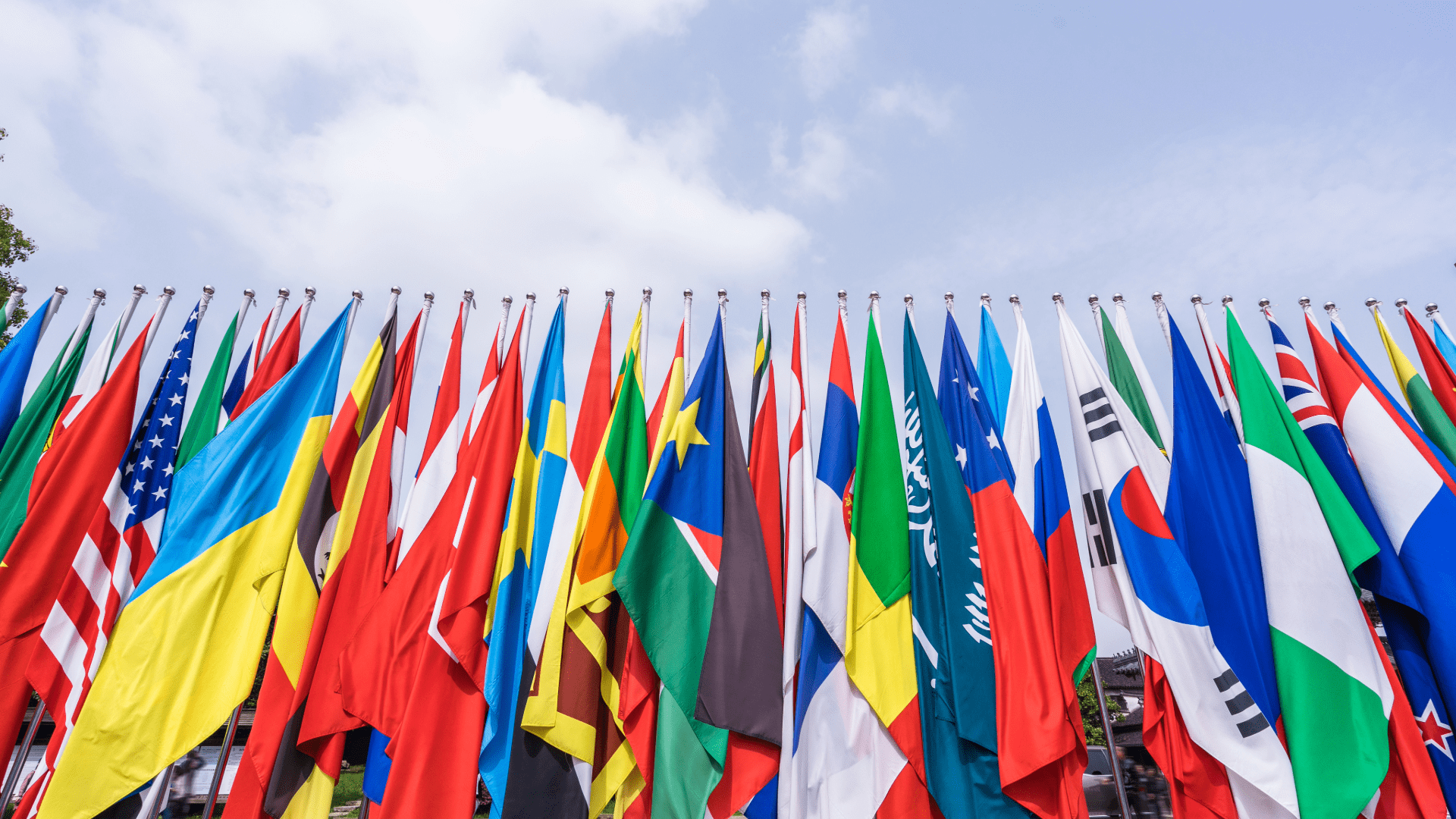
Selling beyond U.S. borders? We coordinate global filings through the Madrid Protocol and country-specific applications to protect your brand worldwide.
Sources: World Intellectual Property Organization; Madrid Protocol.
Trademark rights are territorial, so a U.S. registration protects you only in the United States. To protect your brand abroad, you register in each market, either through the Madrid Protocol, which can reach many member countries from one filing, or through direct country applications.
Trademark protection is territorial. Your U.S. registration, however strong, does nothing to stop a copycat in Europe, Asia, or anywhere else you do business. If you sell across borders, your protection has to cross them too.
There are two main paths. The Madrid Protocol lets you seek protection in many member countries through a single international application, which is efficient for multi-market brands. Direct national filings cover countries outside that system or where a tailored approach is better.
We build and coordinate your international filing strategy, choosing the right mix of Madrid and country-specific applications and working with a vetted global network, so your brand is protected in the markets that matter to you.
Schedule a ConsultationA coordinated global strategy built around where you do business.
Reach many member countries from one application.
Direct national filings where they fit better.
Choose the right markets and the right path.
Manage a vetted network across borders.
Use your filing date to protect early.
Keep international marks organized and current.
Protection in the markets where you actually sell.
One application can reach many member countries.
A vetted network handles country-level work.
Boutique attention without big-firm overhead.
Tell us about your brand, your goals, and your risks. We assess your assets and where you are exposed.
We build a tailored protection and monetization plan, your roadmap for making IP work for the business.
We register, draft, and put the protections in place, building a portfolio that holds up and stays useful.
We monitor, enforce, and license, turning protected IP into a durable, revenue-producing asset.

“The hard lesson for growing brands is that a U.S. trademark is a U.S. trademark, and nothing more. I have seen companies expand into a new country only to find someone already registered their name there, sometimes a competitor, sometimes an opportunist who saw them coming. Trademark rights are territorial, so you have to plant your flag in each market you care about. The Madrid Protocol makes that far more efficient than it used to be, and we coordinate the strategy so your protection grows with your footprint instead of trailing behind it.”
A U.S. registration stops at the border. We build an international strategy that protects your brand worldwide. Schedule a consultation.

Reproduction of any content on this site is prohibited except for individual, non-commercial, informational use. This limited permission does not allow modification, distribution, or incorporation of any content into other works or publications in any medium. You may not reproduce or distribute content from this site to any third party.
Copyright © 2026 Shin Law Office, PLC. All rights reserved.
Powered by HILARTECH, LLC
Copyright © 2026 Shin Law Office, PLC. All rights reserved.
Reproduction of any content on this site is prohibited except for individual, non-commercial, informational use. This limited permission does not allow modification, distribution, or incorporation of any content into other works or publications in any medium. You may not reproduce or distribute content from this site to any third party.
Guides, finders & calculators
Start with a core guide, or choose a sector for more specific tools.
14 tools
Try a broader phrase such as “contract,” “property,” or “family.”
Ask the firm for helpFind a starting point. Then talk through your situation.