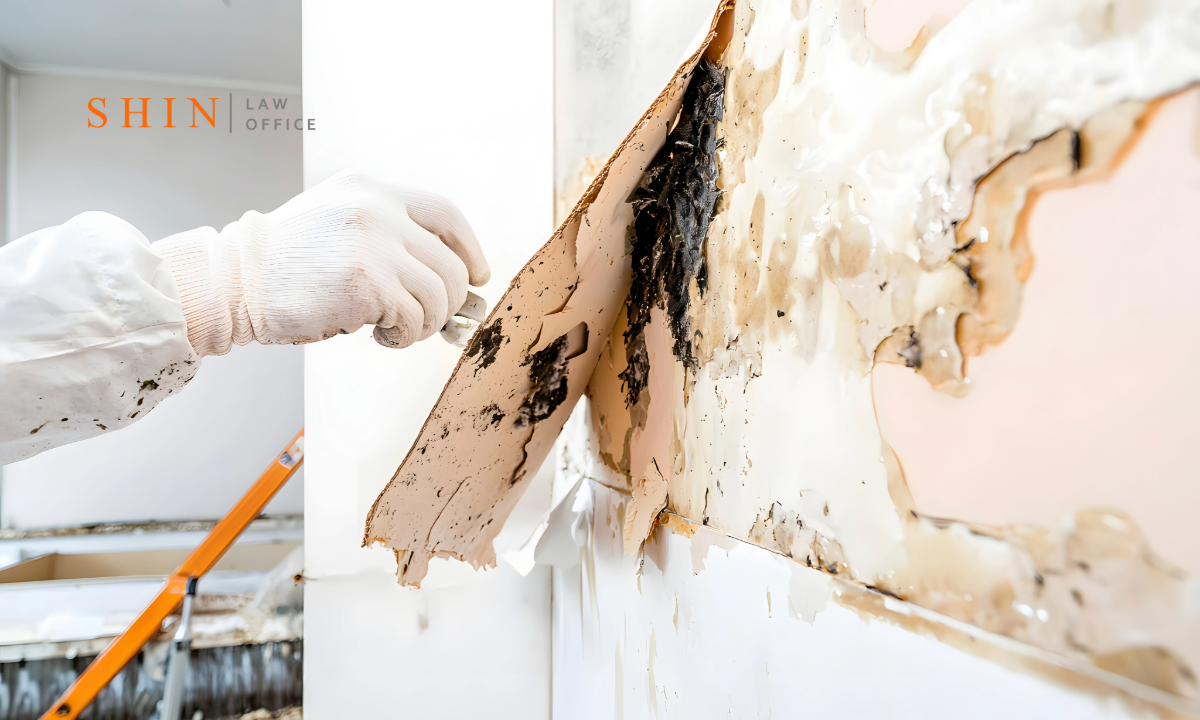
Northern Virginia Mold Lawyer: Toxic Mold Cases Across Fairfax, Loudoun, Arlington, and Prince William
By Anthony I. Shin, Esq. | Personal Injury and Toxic Tort Litigation | Shin Law Office
BOTTOM LINE UP FRONT
A Northern Virginia mold case is usually one of three things: a tenant’s claim against a landlord who ignored a mold problem, an employee’s claim against an employer or office building owner whose property made people sick, or a homeowner’s claim against the builder whose construction defects let mold grow inside the walls. Each path has different proof requirements, different deadlines, and different recoverable damages.
The deadlines are short. Personal injury claims for mold-related illness must be filed within two years of accrual under Va. Code Section 8.01-243. Property damage claims have a five year window. Builder defect claims run into Virginia’s five year statute of repose under Va. Code Section 8.01-250. Once those clocks expire, no court will revive the case no matter how serious the harm.
Call 571-445-6565 or use the contact form if mold has caused illness or property damage in your Northern Virginia home, apartment, office, or workplace.
Where mold fits in the bigger picture:
Mold cases are one branch of toxic tort law in Virginia. For statutes, causation standards, expert proof, and the other major exposure categories Shin Law Office handles statewide, see the complete Virginia toxic tort litigation guide.
How Mold Cases Work in Northern Virginia
Northern Virginia’s climate is wet enough to grow mold in any building where moisture gets in and stays. Old leaking pipes in Arlington apartment buildings, slab moisture in Fairfax basements, drainage failures behind new construction in Woodbridge, faulty HVAC condensate lines in Tysons office towers, and roof leaks in Leesburg homes are all common sources. The mold most people worry about is Stachybotrys chartarum, the species commonly called black mold, but other species can also cause health problems and trigger legal claims.
The legal questions in any mold case come down to three things. Who controlled the property where the mold grew? When did they know about the moisture or the mold? What did they do about it once they knew? The answers determine which legal theory applies, who the defendants are, and what damages are recoverable.
Three Types of Mold Cases I Handle
1. Tenant cases against landlords
Under the Virginia Residential Landlord and Tenant Act (VRLTA), Va. Code Section 55.1-1227 requires landlords to maintain residential premises in a fit and habitable condition. A landlord who knows about a mold problem and fails to fix it within a reasonable time after written notice can face several remedies under VRLTA, including rent escrow, repair-and-deduct, lease termination, and damages for any resulting harm. When mold has caused medical bills, missed work, or property damage, those claims are pursued separately under Virginia personal injury and property damage law.
The tenant’s strongest evidence is usually the paper trail. Written notices to the landlord. Photos of visible mold and water damage. Inspection reports. Medical records linking symptoms to mold exposure. Communications showing what the landlord did or did not do after being notified. Tenant cases that succeed almost always have a documented timeline that shows the landlord’s failure to respond.
2. Workplace and commercial mold cases
Mold in offices, retail spaces, and other commercial buildings opens different doors. For employees, workers’ compensation is usually the first stop for occupational illness claims, though Virginia’s workers’ comp system has historically been hostile to occupational disease claims that involve causation disputes. When the employer’s conduct rises above ordinary negligence, or when a third party (the building owner, the property manager, the HVAC contractor) is responsible, civil claims may also be available.
Building owners and commercial landlords have their own duties under Virginia premises liability law. A commercial tenant whose business has been disrupted by a building-wide mold problem may have claims for business interruption, lost profits, and the cost of relocating. These cases typically turn on the lease language and the building owner’s response to mold reports.
3. Builder defect cases
New construction with mold inside the walls almost always traces back to a construction defect. Faulty waterproofing. Improper flashing. Drainage that sends water toward the foundation instead of away from it. HVAC systems sized wrong for the building, creating chronic condensation. Stucco or siding installed without proper moisture barriers. When the homeowner discovers mold a year or two after move-in and an inspection reveals the underlying defect, the claim runs against the builder, the general contractor, and sometimes the subcontractors who did the specific failed work.
Virginia’s statute of repose for construction defects under Va. Code Section 8.01-250 cuts off claims five years after substantial completion of the project, regardless of when the defect is discovered. That deadline is unforgiving. Homeowners who discover mold problems in year four of ownership have to move fast.
Key Virginia Laws for Mold Cases
- VRLTA habitability duty: Va. Code Section 55.1-1227 (landlord obligation to maintain fit and habitable premises)
- Personal injury limitations: Va. Code Section 8.01-243 (two years from accrual for mold-related illness)
- Property damage limitations: Va. Code Section 8.01-243 (five years for damage to real or personal property)
- Construction statute of repose: Va. Code Section 8.01-250 (five years from substantial completion for builder defect claims)
- Breach of construction contract: Va. Code Section 8.01-246 (five years for written contracts, three years for oral)
- Punitive damages cap: Va. Code Section 8.01-38.1 (punitive damages capped at $350,000 when available)
Causation is where most mold cases live or die:
Virginia courts apply strict standards to expert testimony on the link between mold exposure and specific health symptoms. A general medical opinion that says mold can cause respiratory problems is not enough. The expert has to be able to connect this person’s specific exposure to this person’s specific symptoms with reliable methodology. Cases that fail almost always fail on causation, not on whether mold was actually present.
What to Do If You Suspect Mold
- Report it in writing. Notify your landlord, employer, or builder in writing. Save a copy. Verbal complaints rarely survive a contested case. Email or certified mail is best.
- Document everything. Take dated photos of visible mold, water damage, and any related conditions like staining, peeling paint, or warped surfaces. Keep a timeline of when symptoms started, when you reported the problem, and what response you got.
- See a doctor and tell them about the exposure. Ask whether mold could explain your symptoms. Make sure the visit is documented in your medical record with the exposure history. Untreated symptoms with no medical record will not support a mold case later.
- Save medical records and bills. Every visit, every prescription, every test. Damages in a mold case are built from these records.
- Get legal advice before signing or accepting anything. Landlords sometimes offer to release you from a lease in exchange for a waiver of injury claims. Builders sometimes offer to repair the defect in exchange for waiving warranty claims. Either move can kill a viable case.
Where I Work in Northern Virginia
Mold patterns differ across Northern Virginia. The legal framework is the same, but the typical fact patterns vary by county and property type. Below are my topic-specific guides organized by case type:
Tenant and Apartment Mold Cases
- Residential mold infestation in Fairfax: suing a landlord for exposure
- Mold exposure in Arlington apartments: tenant remedies under VRLTA
- Mold exposure in Woodbridge: what tenants need to know
- Woodbridge toxic mold in apartment complexes: who is responsible
- Can you sue for mold damage in Fairfax homes or workplaces
Workplace and Commercial Mold Cases
- Mold exposure in Fairfax office buildings: workplace hazards
- Understanding mold exposure inside Northern Virginia office buildings
- Ballston commercial spaces: employer liability for employee illnesses
- Pentagon City retail and restaurant business interruption claims
- Crystal City condos and offices: HVAC and ventilation mold risks
Builder Defect and New Construction Mold
- Woodbridge homeowners: toxic mold claims against builders for drainage defects
- Mold exposure in new developments: suing builders in Loudoun County
- Courthouse and Clarendon: water damage and mold in aging properties
Specialized Mold Settings
- Haymarket toxic mold in schools and daycare centers
- Dumfries toxic mold in military housing
- Chronic health effects from hidden mold in Leesburg homes
- Gainesville and Bristow families: mold after flooding and insurance denials
- Industrial mold exposure in Leesburg
- Toxic torts attorney Leesburg: chemical and mold exposure
Talk Through Your Mold Situation
Mold cases get harder the longer they wait. Symptoms blur. Records go missing. Witnesses move out. The earlier I can review what happened, the better the case usually looks. I review the photos, the notices, the medical records, and the communications, then walk you through what claims you have, what damages are recoverable, and what the realistic outcomes look like.
Call 571-445-6565 or use the contact form to start the conversation.