

By Anthony I. Shin, Esq. | Personal Injury Attorney | Toxic Torts | Shin Law Office
Is Your Woodbridge Home Sitting on a Toxic Time Bomb?
If you drive down I-95 through Prince William County, specifically along the Horner Road corridor in Woodbridge, you see the signs of progress. You see cranes, earthmovers, and fresh rows of townhomes gleaming in the Virginia sun. It is a boom. Families are moving in, looking for their slice of the American Dream in Northern Virginia.
But as a toxic tort attorney who has spent years fighting for the rights of Virginians, I look at that same view and I don’t just see progress. I see a potential ticking time bomb. We need to talk about what is buried beneath the foundations of the new “luxury” developments going up near the old debris landfills off Horner Road, specifically areas like the “Ray’s Regarde” site. We need to talk about “bad dirt,” unstable soil, and the invisible, odorless killers known as Methane and Volatile Organic Compounds (VOCs). If you have bought a home in this corridor and are experiencing unexplained health issues, sinking foundations, or strange odors, you might be the victim of construction negligence. And I want you to know: Virginia law gives you a sword to fight back.The Legacy of Horner Road Corridor: Building on “Bad Dirt”
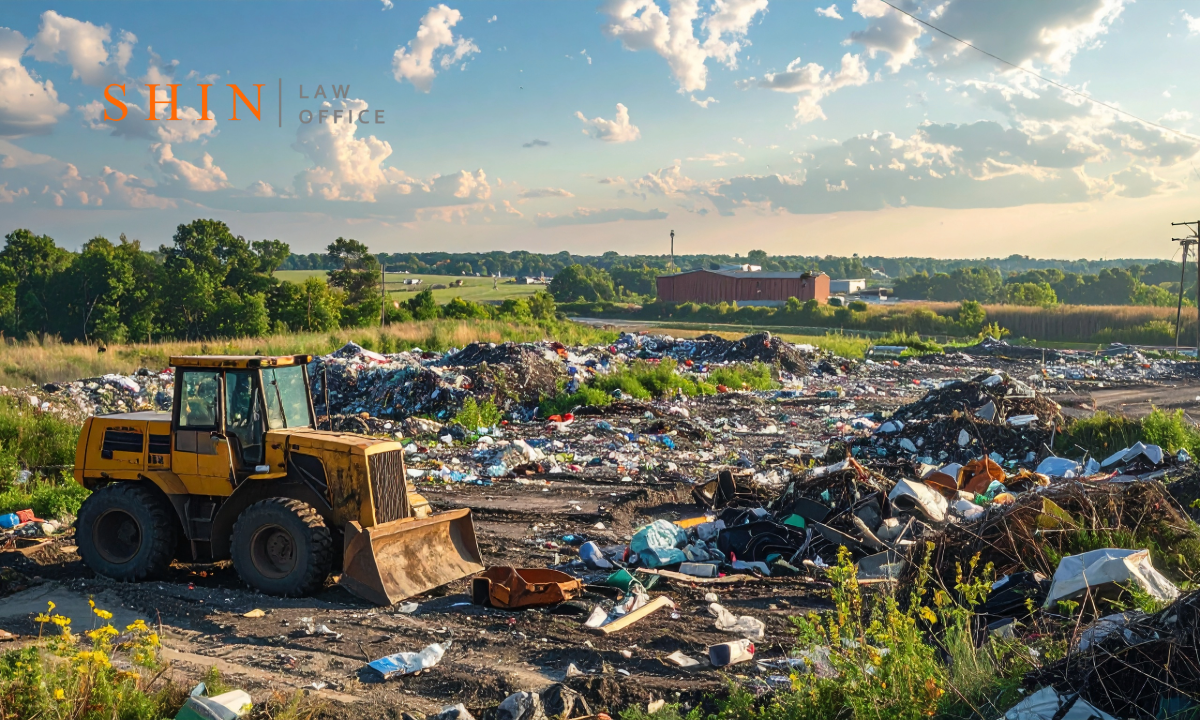
To understand the legal battle, you have to understand the history. Decades ago, before the housing boom, parts of the Horner Road corridor were used as rubble fills and debris landfills. These were not designed with modern liners or containment systems. They were holes in the ground where we dumped construction debris, organic matter, and industrial waste. The developers of projects like Ray’s Regarde know this. They look at a map, see a “reclaimed” site, and see dollar signs. They promise remediation. They promise that they have compacted the soil and capped the waste. But here is the reality of physics and chemistry: Matter does not disappear; it transforms. When organic material (wood, paper, vegetation) buried deep underground begins to rot in an oxygen starved environment, it generates methane gas. When industrial solvents, often illegally dumped or mixed in with construction debris, break down, they release Volatile Organic Compounds (VOCs) like benzene, trichloroethylene (TCE), and vinyl chloride. When you drop a concrete slab foundation on top of that “bad dirt,” you are not sealing it off. You are creating a pressure cooker.The Invisible Intruder: Vapor Intrusion
The primary mechanism of injury in these cases is a phenomenon called Vapor Intrusion. Imagine your home in the winter. You have the heat on. Hot air rises, escaping through the roof. This creates a vacuum effect at the bottom of the house, essentially sucking air up from the ground through the pores in your concrete slab, cracks in the foundation, and gaps around utility pipes. If your home is built over a legacy landfill plume, your house is acting like a chimney for toxic gases.The Health Risks
We are not just talking about a bad smell.- Methane: While non toxic, it is highly explosive. If methane builds up in a confined space (like a basement or utility closet) at concentrations between 5 and 15 percent, a spark from a light switch can cause a catastrophic explosion.
- VOCs (Benzene, TCE): These are carcinogens. Long term low level exposure is linked to leukemia, non Hodgkin lymphoma, and severe neurological damage.
The Legal Battlefield: How We Fight Back
In Virginia, suing a developer is an uphill battle, but it is one we can win if we are aggressive, precise, and armed with the right statutes. The developers count on the doctrine of Caveat Emptor, “Let the Buyer Beware.” They think a few disclaimers in a fifty page closing packet protect them. They are wrong.Construction Negligence and the Duty of Care
First and foremost, we look at Negligence. Under Virginia common law, a builder or developer has a duty to exercise reasonable care in the construction of a home. This extends to the preparation of the land. If a developer knew or should have known that the soil contained decaying organic matter or hazardous VOCs, and they failed to install a proper sub slab depressurization system (a vapor barrier and vent pipe similar to a radon system), they have breached their duty. We look to cases such as Kendal v. Frank E. McKinley, which establish the standard of workmanlike quality. Building a home on soil that is actively generating explosive or carcinogenic gas is, by definition, unworkmanlike. Furthermore, if the soil is unstable due to decomposition, leading to cracking foundations and structural failure, we invoke the implied warranty of structural integrity for new homes (Va. Code § 55.1-357), provided the suit is brought within the statutory warranty period (usually one year for workmanship, five years for foundation).Fraud and the Failure to Disclose
This is where the Shin Law Office takes the gloves off. The most potent weapon we have in toxic tort litigation involving real estate is Fraud. Virginia is a Caveat Emptor state, but there is a massive exception: Fraudulent Concealment. Under the Virginia Residential Property Disclosure Act (Va. Code § 55.1-700 et seq.), a seller must provide certain disclosures. Developers often try to hide behind a “disclaimer” statement, effectively saying, “we make no representations.” However, looking at the seminal case of Van Deusen v. Snead, 247 Va. 324 (1994), the Supreme Court of Virginia held that a seller (or developer) cannot use a disclaimer to shield themselves from liability if they actively concealed a defect or diverted the buyer from discovering it. Here is the litigation angle: Did the developer have soil reports showing high methane levels? Did they have environmental impact studies showing the “Ray’s Regarde” site needed specific remediation that they skipped to save money? If they had this knowledge and failed to disclose it, or worse, if they told you the land was “pristine” or “fully remediated,” that is Fraud in the Inducement. If they plastered over cracks in the foundation caused by settling landfill debris before selling you the home, that is active concealment. Under Armentrout v. French, 220 Va. 450 (1979), this creates liability for the seller.Nuisance and Trespass
Even if negligence is hard to prove, we look to Nuisance and Trespass. If toxic gases from the underlying landfill (which may be owned by a separate entity or the HOA) are migrating into your private property, that is a trespass. It is an invasion of your exclusive right to enjoy your property. In Bowers v. Westvaco Corp., 244 Va. 139 (1992), the court recognized that an invasion of invisible particles (or gases) that impairs the use and enjoyment of land is actionable. If you cannot sleep in your basement because of the risk of benzene exposure, you have a Nuisance claim.The Statute of Limitations Trap
I cannot stress this enough: Time is the enemy. In Virginia, the Statute of Limitations for property damage is generally five years, and for personal injury, it is two years. However, under Va. Code § 8.01-243, the clock starts ticking when the injury occurs, not necessarily when you discover it. However, for fraud cases, the clock starts when the fraud is discovered or should have been discovered. This is a critical distinction that lets us help families who may have bought these Woodbridge homes years ago but are only now realizing why they are sick.For the full Virginia toxic tort framework:
Vapor intrusion and landfill exposure are one branch of a much larger field. For statutes, the discovery rule under Va. Code § 8.01-249(4), causation standards, expert proof rules, and the other major exposure categories Shin Law Office handles statewide, see the complete Virginia toxic tort litigation guide.
Why You Need a Toxic Tort Specialist
These are not standard slip and fall cases. You cannot walk into a general practice firm in Leesburg or Manassas and expect them to know how to read a soil vapor gas chromatograph. At Shin Law Office, we build our cases on science.- We hire industrial hygienists to test the air quality in your home for specific VOC signatures that match the landfill profile.
- We hire geotechnical engineers to core sample the soil and prove the developer built on “bad dirt.”
- We hire forensic accountants to dig through the developer’s emails and find the smoking gun, the memo where they decided a vapor barrier cost too much.
Protect Your Investment and Your Health
The development along Horner Road and the Prince William Parkway is not going to stop. But that does not mean you have to be a casualty of it. If you live in a new development in Woodbridge, particularly near the legacy landfill sites, and you have noticed chemical odors, settling foundations, or health issues in your family, do not wait. The developers have teams of lawyers paid to make you go away. You need someone who knows the terrain, knows the science, and knows the Virginia Supreme Court rulings that protect you. I am Anthony Shin. I know Prince William County, and I know Toxic Torts. Let’s find out what is really under your house.
— Anthony I. Shin, Esq.
Principal Attorney | Shin Law Office
Call 571-445-6565 or book a consultation online today.
Disclaimer: The information provided in this article is for educational purposes only and does not constitute legal advice. Every case is unique. If you believe you have a claim, contact a qualified attorney immediately to discuss the specifics of your situation and the applicable statutes of limitation.
