BLUF (Bottom Line Up Front)
Neck injuries, even “minor” whiplash, can cause real pain and long-term disability. In Virginia, recovering from a neck injury requires prompt medical care, solid evidence, and expert testimony. As a Virginia lawyer, I’ve seen cases where juries rejected neck injury claims without objective evidence. This article explains the types of neck injuries, how to prove them, the key Virginia laws and cases, and what compensation you might expect. I’ll also share what steps to take after a neck injury, so you can protect your claim.

Table of Contents
Chapter 1: Understanding Neck Injuries
Figure: Tips to reduce whiplash risk after a crash (e.g., adjust seat, wear a seatbelt) . Neck injuries often occur in car crashes and other sudden impacts. A common neck injury is whiplash, where the head snaps forward and back, straining muscles, ligaments, and nerves. In medical terms, whiplash is a “sprain” of the cervical spine from sudden force. Even low-speed collisions can cause a whiplash-type strain. Victims may feel neck pain, stiffness, shoulder pain, headaches, or even tingling in the arms. Importantly, whiplash symptoms can be delayed – sometimes appearing only a day or more after the crash. This is why it’s critical to get checked by a doctor promptly after any collision, even if you feel OK at first.
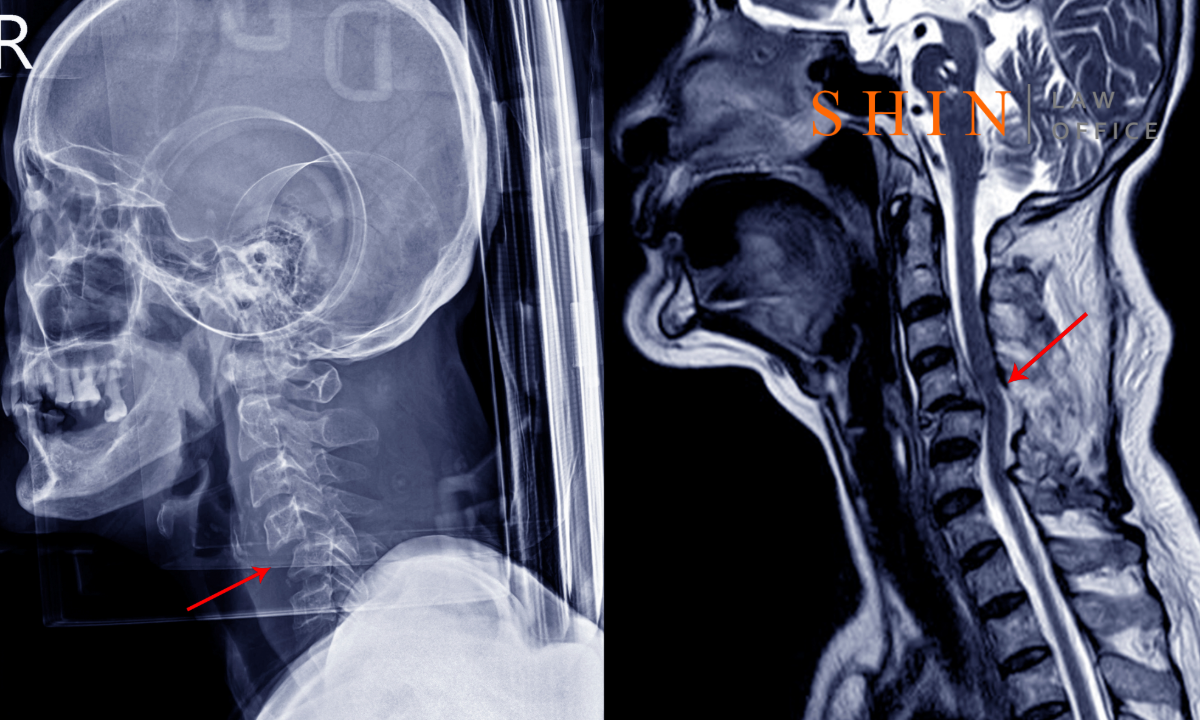
Neck injuries range from mild soft-tissue sprains to severe spine trauma. In many cases, the injury is “invisible” – no bone breaks, no cuts – yet the pain and muscle spasms are real. Common symptoms include neck pain, limited range of motion, shoulder or upper back pain, dizziness, headaches, or numbness in the arms. For example, an injured person often reports that “something pulled in the back of my neck” at impact. Doctors take these complaints seriously and may order X-rays or an MRI to rule out fractures or disc herniations. They often diagnose muscle or ligament strains and prescribe therapy.
In summary, if you feel any neck discomfort, stiffness, or neurological symptoms (like numbness) after an accident, it could be a serious injury. Don’t shrug it off. Seek medical evaluation right away. Delay can worsen injuries, and the law requires you to seek prompt care. As we’ll see, strong medical documentation is crucial for a Virginia personal injury claim.
Chapter 2: Proving Your Neck Injury – Evidence & Expert Testimony
Victims ask: “I feel pain, but how do I prove a neck injury in court?” The answer is by building a strong evidentiary foundation. In Virginia, the plaintiff (injured person) must prove by a preponderance of evidence that the other driver’s negligence caused the neck injury. In practice, that means obtaining and preserving medical records, imaging, and credible witness testimony.
1. Document the Accident and Injuries: Start by documenting the accident scene. Photograph vehicle damage, your position in the car, and any visible bruises or deformities. Even if your car seems undamaged, take pictures of the bumpers – any scuffs or dents can help link the crash to your injury. For example, in Gilliam v. Immel, a 2017 Virginia case, the plaintiff had no visible vehicle damage or bruises but only claimed pain. The court refused recovery because only her say-so proved a neck/back injury, with no objective support.
2. Seek Immediate Medical Care: After any crash, see a doctor or go to the emergency room even if you think you’re fine. Whiplash and soft-tissue injuries can be hidden and worsen without treatment. Tell the doctor exactly where it hurts and how it happened. ER doctors may perform X-rays to check for broken bones. Follow their advice: physical therapy, chiropractic care, or specialist care. Keep copies of every medical bill, diagnosis, and prescription. In Gilliam, the plaintiff immediately sought treatment and received X-rays, but did not follow up with the treating doctor who testified. That lack of continuous medical evidence doomed her claim.
3. Medical Evidence: Your medical records are the backbone of your claim. Virginia law does not require a certain injury threshold – even a soft-tissue “sprain” can warrant damages – but you must show the injury. If there are positive findings (e.g. muscle spasms, ligament strain, disc bulge), highlight those. For instance, in Foster v. McNamara (2025), the plaintiff had ligamentous instability in his neck on X-ray. This gave objective proof of injury that he could relate to the crash (with proper expert interpretation).
4. Expert Testimony: To connect the dots between the crash and your injury, Virginia trials often involve expert witnesses. Traditionally, that meant medical doctors. A new Virginia law now allows chiropractors, too. Under Va. Code § 54.1-2900, chiropractors are authorized to treat spine and joint injuries. And Va. Code § 8.01-401.2(A) authorizes non-doctors to testify on medical causation for injuries within their scope. In Foster, the Court of Appeals held that barring a chiropractor from testifying on the cause of neck injuries was error. Simply put, if you are treated by a chiropractor who uses X-rays or MRI reports, that expert can testify on how the crash caused your neck injury.
Practically, you or your lawyer should identify treating physicians or chiropractors who can testify. For example, if your MRI shows a bulging disc, a neurosurgeon or orthopedist can explain how that condition relates to the trauma. If you saw a chiropractor soon after the accident (within weeks), that chiropractor can credibly say your neck sprain stemmed from the collision. Be aware: Defense lawyers will look for anything to undercut your experts, so make sure all your evidence – records, notes, bills – is consistent.
5. Jury’s Credibility: Remember that in Virginia, if a jury finds conflicting evidence about injuries, the jury decides whom to believe. In Gilliam, the jury clearly credited the defense evidence (no objective findings) and awarded $0 for neck pain. Once they do that, the appellate court will not second-guess them if the evidence was in conflict. In short, we have to present a persuasive, consistent story with both your testimony and the expert’s backed by records.
In summary, proving a neck injury in Virginia means documenting everything and using experts. Don’t rely on your word alone. Treat the claim like a crime scene: photograph, go to doctors immediately, keep all records, and get expert opinions. As one Virginia court warned, the burden is on the plaintiff “to prove with reasonable certainty or by a preponderance of the evidence that the injuries for which she claims damages were properly attributable to the accident”.
Chapter 3: Virginia Law & Case Precedents
Virginia courts have long recognized neck injuries as compensable but tough to prove. Here are key legal takeaways:
- Burden of Proof: As noted, the plaintiff must prove causation and damages. Smith v. Wright (Va. 1966) explicitly held the burden. If you fail, you get no damages.
- Credibility and Jury Deference: In Gilliam v. Immel (2017), the Supreme Court of Virginia upheld a zero-dollar verdict because the plaintiff lacked objective proof. The facts: Ms. Gilliam was rear-ended, felt some neck and back pain, but her car had no discernible damage. She saw doctors and got bills, but presented no medical evidence linking her pain to the crash. The jury accepted this and awarded $0. The Supreme Court said the jury, as fact-finder, could disbelieve her injury claims. The court noted that if evidence conflicts and depends on credibility, the jury’s verdict stands. In other words, “no evidence” of injury means no recovery, even if the plaintiff is subjectively suffering.
- Expert Testimony Allowed: Contrast that with Foster v. McNamara (Va. Ct. App. 2025). There, the plaintiff had pre-existing spinal injuries and was in a car crash as a passenger. The trial judge wrongly barred the plaintiff’s chiropractor (Dr. Roodman) from testifying on the cause of the neck injury, citing an old understanding that only MDs can offer medical opinions. The Court of Appeals reversed, holding that, by statute, chiropractors may testify about injuries within their scope. The court emphasized that excluding the chiropractor was reversible error because injury causation is central and not harmless to omit. Put simply, Virginia now recognizes chiropractic experts as legitimate medical witnesses regarding the causation of neck injuries.
- Contributory Negligence: A critical Virginia rule is contributory negligence: if the plaintiff is even 1% at fault (e.g., not wearing a seatbelt, or not braking), recovery may be barred. For neck injuries, always fight claims that you were somehow negligent. (See Va. Code § 8.01-5, et seq.) – even though we didn’t discuss it above, remember this all-or-nothing defense in Virginia.
- Statute of Limitations: Under Va. Code § 8.01-243, most personal injury claims, including neck injuries, must be filed within two years of the accident. Failure to file suit (or send a written demand, as required in auto cases) within two years typically means you lose the right to sue. (NOTE: Virginia auto law also has special demand letter rules for insurance claims.) The bottom line: don’t delay.
- Insurance Thresholds: Virginia requires that non-economic damages (pain and suffering) from car accidents exceed a $300 threshold before suing the at-fault driver. Neck injury cases often hinge on this threshold. If only the medical bills exceed $300, you might sue for them. But to recover pain & suffering beyond that, doctors often must certify permanent injury. Always discuss strategy with your lawyer.
Chapter 4: Damages in Neck Injury Cases
If you prove your neck injury claim, what can you get? Neck injury damages fall into two buckets:
- Economic Damages: These are actual monetary losses. They include all reasonable and necessary medical expenses from the accident date forward – ER bills, doctor visits, MRIs, surgery, physical therapy, chiropractic care, prescription meds, etc. For example, in Gilliam v. Immel, the plaintiff submitted $73,000 in medical bills. The defense conceded those were “incurred,” but disputed they were accident-related. If your neck injury required substantial treatment, expect high medical bills – keep meticulous records and receipts. Also include lost wages or lost earning capacity if you had to miss work.
- Non-Economic Damages: These compensate for pain, suffering, mental anguish, loss of enjoyment of life, and disability. Neck injuries can cause chronic pain or limitations (e.g. cannot carry groceries, exercise, or do yard work). The law allows compensation for all those, measured in dollars, by a jury. There is no fixed formula; it depends on severity and how the injury affects your daily life. For example, courts may consider how long you’ll have pain, whether you need ongoing therapy, and how it disrupts your work and hobbies. If your neck injury causes neurological issues (like arm numbness), that can raise the value. Be aware: in Virginia, a single-digit verdict can be an insult even if liability is clear. Gilliam shows that juries can award zero if tey disbelieve the injury. On the other hand, if evidence is strong, juries typically award five to six figures. Neck injury verdicts vary widely – from thousands for minor strains to well over $100,000 for debilitating chronic injury. According to surveys by local firms, settlements in Virginia neck injury cases often range from about $10,000 for mild cases to $200,000 or more for severe cases. But remember, each case is unique.
- Punitive Damages: Rarely relevant in simple neck injury accidents, but if the defendant’s conduct was egregious (e.g., drunk driving), punitive damages may be available. These punish the wrongdoer and deter similar acts. Virginia caps punitive damages in some cases, but that’s beyond the scope here.
In negotiating with insurance or going to trial, my goal is to document every injury and cost, and to tell the story of your suffering. Charts or summaries of treatment can help the jury visualize six months of therapy or surgeries you endured. We must convincingly link all of it to the accident.
A practical tip: keep an ongoing “pain diary.” Write short notes when you have a flare-up, or get an injection, or miss work. These notes, though not formal evidence, help you recall and testify consistently. Juries remember stories, so describe how the neck injury has changed your life – sleepless nights, lost recreational time, irritability from constant pain (as one whiplash patient reported). Using real-life examples makes your case compelling.
Chapter 5: Working with Your Attorney After a Neck Injury
I speak from experience when I say: do not handle a serious neck injury claim alone. An experienced Virginia personal injury attorney can guide you through the legal maze. Here’s what I advise every client in the first few steps:
- Get Medical Care Immediately: We covered this, but it bears repeating. The first 48 hours after an accident are crucial. Even if you feel fine, have a full exam. This demonstrates to insurers/jury that you treated in good faith. Any delay or excuse for waiting (like “I thought it was fine”) can hurt your credibility.
- Report the Accident: If it’s a car wreck, report it to law enforcement and your insurance company (even your own insurance). Virginia drivers must file an accident report if damages exceed $1,500 or if anyone is hurt. Prompt reporting helps preserve the record and keeps the statute of limitations from running out on notification requirements.
- Document Everything: Save every bill, prescription label, doctor note, therapy worksheet. Write down witnesses’ names and contact info. Note any conversations with insurers. These pieces will become evidence.
- Contact an Attorney Early: A lawyer can handle communications with the other driver’s insurer. The moment you notify them of an injury claim, insurance adjusters begin gathering evidence. Having counsel means you don’t have to answer tricky questions on your own, and your lawyer can make sure you comply with law (like sending a written demand within the correct time frame, if needed). In Virginia auto cases, sending a written demand within two years is often required under the insurance statute (see Va. Code § 38.2-2206 and related regs). I ensure those requirements are met so your case isn’t tossed on a technicality.
- Prepare for Contributory Negligence: Be aware that Virginia is one of the few “pure contributory negligence” states. Even 1% fault on your part can ruin a case. Examples: if you admit to texting or not wearing a seatbelt, the defense may claim you’re barred. We will argue contributory negligence only if absolutely necessary (e.g., obvious fault on both sides), but we usually argue lack of fault and emphasize the other party’s liability.
- File Suit If Needed (Within 2 Years): If negotiations fail, I will file a lawsuit before the two-year deadline. In Virginia, it’s actually 2 years from the date of the accident to file suit or send a formal written demand. Pro tip: even if the insurer says “we’ll settle,” they may still contest later, so don’t wait beyond one year to demand.
- Pre-Trial and Trial: If your case goes to court, your attorney will prepare a detailed complaint citing the law and facts, depose witnesses, and gather all evidence. At trial, you’ll tell your story; the defense may bring experts to downplay your injury. But remember Smith v. Wright and Gilliam v. Immel – if your evidence is credible and the other side’s story doesn’t hold water, the jury will likely side with you. Our job is to stack the deck with strong evidence and persuasive witnesses.
- Client Communication: I maintain close contact with clients. We will discuss what to expect at each step: deposition (pre-trial questioning), mediation, or trial dates. I encourage clients to be involved: ask questions, review documents, and meet with any experts we hire. A strong attorney-client relationship improves outcomes.
In my years representing Virginians, I’ve helped many clients just like you obtain full compensation for their neck injuries. I know it’s stressful – dealing with medical bills, insurance adjusters, and pain. My promise is to handle the legal side so you can heal and rebuild. I’ll keep you updated, explain legalese, and fight to maximize your recovery within the bounds of Virginia law and Advertising, Education, and Outreach (AEO) standards. (That means no inflated promises – I’ll give you the honest picture, ethically.)
Bottom line: Neck injuries are serious, and Virginia law treats them like any other personal injury. You need objective proof and expert backing to succeed. Early action is critical: seek treatment immediately, document your pain, and consult an attorney. The sooner you build your case, the stronger it will be.
If you or a loved one has a neck injury from an accident, don’t despair. With the right evidence and legal help, you can recover the compensation you deserve for medical care, lost wages, and the pain you’ve endured. My team and I are ready to listen to your story, explain your rights clearly, and guide you through every step. Contact us today for a free consultation. Let’s make sure your neck injury claim is as strong as possible under Virginia law.
FAQs for Neck Injury Law in Virginia
1. What is a neck injury under Virginia personal injury law?
A neck injury includes trauma to the cervical spine region, such as whiplash, ligament sprains, herniated discs, and nerve compression caused by another party’s negligence.
2. How do I know if my neck injury is related to a car accident?
A neck injury is likely related to a collision when symptoms begin soon after the crash, and medical evaluation, treatment records, and imaging connect the pain to the incident.
3. Why is early medical treatment necessary for a neck injury claim?
Early medical treatment creates a record of injury onset and severity, which strengthens legal claims and prevents insurers from arguing the injury occurred later or from another cause.
4. Can soft tissue neck injuries be compensated in Virginia?
Yes. Neck soft tissue injuries, including whiplash and muscle strain, can be legally compensable when supported by credible medical documentation.
5. How long do I have to file a neck injury lawsuit in Virginia?
Most personal injury lawsuits, including neck injury claims, must be filed within two years from the accident date under Virginia law.
6. What damages can I recover for a neck injury?
Damages may include medical expenses, lost income, pain and suffering, loss of enjoyment of life, and any future treatment costs reasonably related to the neck injury.
7. Can a chiropractor provide evidence for my neck injury claim in Virginia?
Yes. Under Virginia law, chiropractors can diagnose and testify about neck injuries within the scope of their practice, which can help support causation and treatment evidence.
8. What if the defendant’s insurance disputes my neck pain symptoms?
Disputes can be countered with objective medical findings, detailed treatment histories, expert testimony, and consistent documentation linking the injury to the accident.
9. Does contributory negligence affect neck injury claims in Virginia?
Yes. Virginia follows a contributory negligence rule, meaning any fault by the injured party may bar recovery if the plaintiff is even partially responsible.
10. Should I consult a Virginia personal injury lawyer about a neck injury?
Yes. A lawyer can evaluate evidence, explain legal deadlines, handle insurance communications, and advocate for maximum compensation based on your injury and treatment.
References
Virginia Statutes
Commonwealth of Virginia. (2024). Code of Virginia § 8.01-243. Limitation of actions for personal injuries.
https://law.lis.virginia.gov/vacode/title8.01/chapter4/section8.01-243/
Commonwealth of Virginia. (2024). Code of Virginia § 8.01-401.2. Opinion testimony by experts.
https://law.lis.virginia.gov/vacode/title8.01/chapter14/section8.01-401.2/
Commonwealth of Virginia. (2024). Code of Virginia § 54.1-2900. Definitions; practice of chiropractic.
https://law.lis.virginia.gov/vacode/title54.1/chapter29/section54.1-2900/
Commonwealth of Virginia. (2024). Code of Virginia § 38.2-2206. Uninsured and underinsured motorist coverage.
https://law.lis.virginia.gov/vacode/title38.2/chapter22/section38.2-2206/
Virginia Case Law
Smith v. Wright, 207 Va. 482, 151 S.E.2d 357 (1966).
https://law.justia.com/cases/virginia/supreme-court/1966/6059-1.html
Gilliam v. Immel, 293 Va. 18, 795 S.E.2d 458 (2017).
https://law.justia.com/cases/virginia/supreme-court/2017/160463.html
Foster v. McNamara, Record No. 1244-23-4 (Va. Ct. App. Mar. 5, 2025).
Virginia Court of Appeals (published opinion).
https://www.vacourts.gov/opinions/opncavwp/1244234.pdf
Medical and Injury Authority Sources
Mayo Clinic Staff. (2023). Whiplash. Mayo Clinic.
https://www.mayoclinic.org/diseases-conditions/whiplash/symptoms-causes/syc-20378921
Cleveland Clinic. (2023). Whiplash injury.
https://my.clevelandclinic.org/health/diseases/11982-whiplash
Johns Hopkins Medicine. (2023). Neck pain and cervical spine injuries.
https://www.hopkinsmedicine.org/health/conditions-and-diseases/neck-pain
Practice and Jury Consideration Sources
Virginia Model Jury Instructions. (2023). Civil instructions on personal injury damages and causation.
https://www.vacourts.gov/courtadmin/aoc/juryinstruc/home.html

Principal Attorney | Shin Law Office
Call 571-445-6565 or book a consultation online today.
Personal Injury | Neck Injury Lawyer for Northern Virginia