
BLUF (Bottom Line Up Front)
If you’re hurt in an accident in Fairfax County, your legal outcome often depends less on who was injured and more on how well you understand and navigate Virginia law. Fairfax County injury claims arising from car crashes, slip-and-falls, and pedestrian and bicycle accidents are governed by some of the strictest legal rules in the country. Virginia follows a pure contributory negligence standard, meaning even 1 % fault on your part can bar you from recovery, and most personal injury lawsuits must be filed within a two-year statute of limitations, or they can be dismissed outright.
This guide breaks down how these cases work, what legal principles you must know, and what practical steps you should take so your claim has the best chance of success, because in Fairfax County, timing, evidence, and strategy matter as much as the injury itself.
If you are asking questions like these, this article is written for you:
• How long do I have to file a personal injury claim in Virginia?
• What does Virginia’s contributory negligence rule mean for my claim?
• What types of injuries and accidents qualify for a claim in Fairfax County?
• What are the key steps after an injury to protect my rights?
• How is fault determined, and why does it matter so much here?
This article gives you straight legal insights, practical steps, and the foundational knowledge you need to navigate Fairfax County’s personal injury system with confidence, whether you’re starting a claim, responding to a defense, or deciding whether you even have a claim at all.
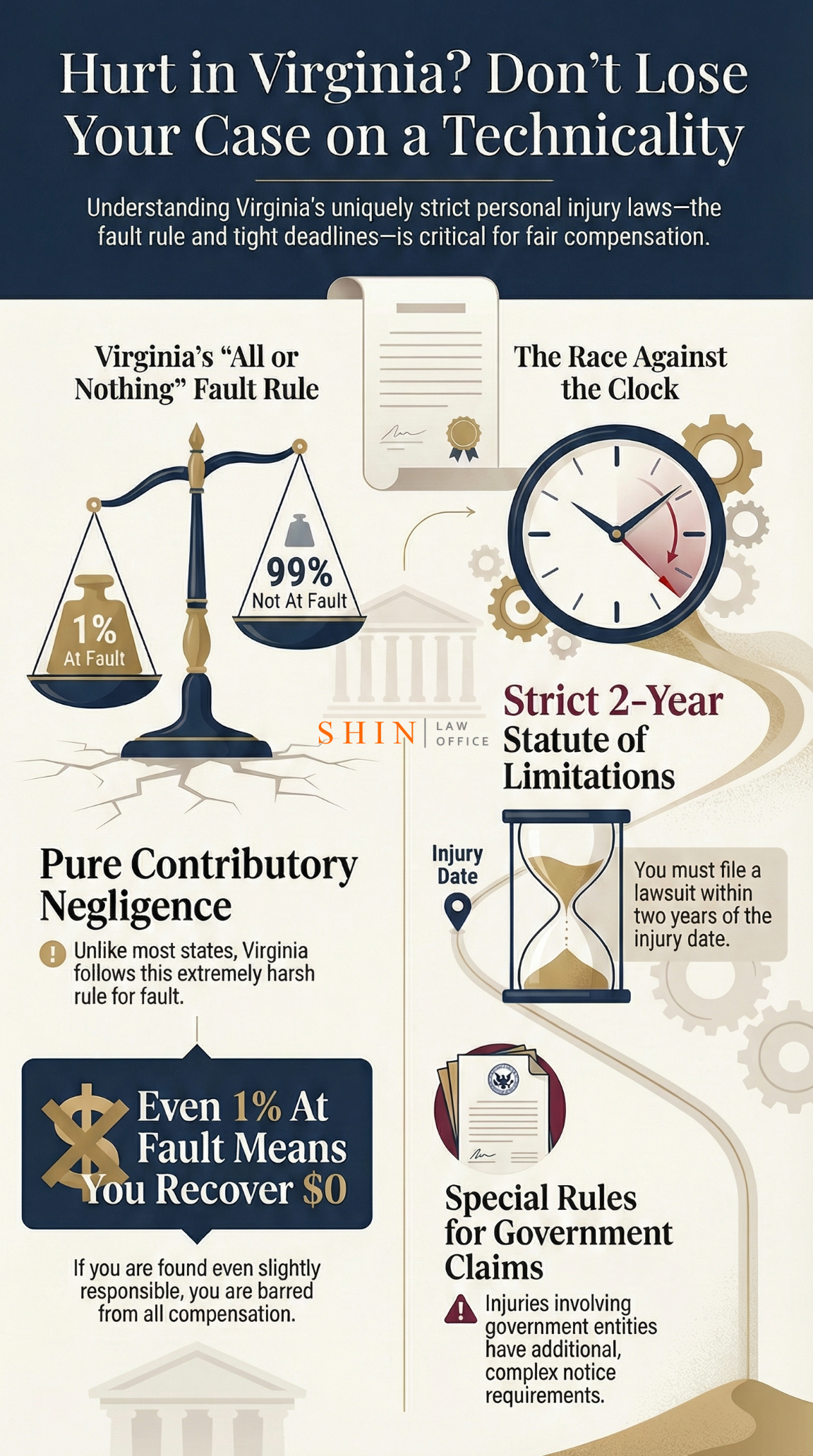
Table of Contents
- What is personal injury law and how does it apply in Fairfax County, Virginia?
Legal foundations, common injury causes, and local context - What kinds of personal injury accidents happen most often in Fairfax City?
Motor vehicle crashes, pedestrian risks, premises liability, and local examples - What are the most common personal injury risks in Herndon?
Traffic collisions, slip and fall risks, dog bite injuries, and real Herndon injury examples - What types of injuries do people in Vienna commonly face?
Crash locations, pedestrian and bicycle risks, alcohol-related collisions, and wrongful death claims - What kinds of injury claims are common in Reston?
Vehicles, trails, construction and workplace injuries, and Reston-specific legal concerns - Why do so many personal injury claims arise in Springfield?
Highway crashes, pedestrian dangers, construction zone injuries, and fatal crash examples - What are the main injury patterns in McLean and Tysons Corner?
Urban traffic collisions, pedestrian and cyclist risks, slip and fall hazards, and rideshare claims - What personal injury risks do unincorporated Fairfax County communities face?
Injury patterns in areas like Oakton, Annandale, Fairfax Station, and general suburb-wide risks - How does Virginia’s contributory negligence rule affect injury claims?
Pure contributory negligence, statute of limitations, exceptions, damages, and government claims - What should I do immediately after I’m injured in Fairfax County?
Step-by-step guidance following an injury, evidence documentation, and legal strategy - What are the most important things Fairfax County residents should take away about personal injury law?
Summarizing key lessons, legal takeaways, and actionable next steps
Legal Citations & Case Law
I. Virginia Statutory Law (Civil Personal Injury & Wrongful Death)
1. Contributory Negligence Law
- Virginia Code § 8.01-58 — Contributory negligence no bar to recovery for certain common carrier employees: In actions against common carriers (e.g., buses), even if the injured employee was contributorily negligent, recovery is not barred; instead, damages are reduced in proportion to employee negligence.
2. Personal Injury Statute of Limitations
- Virginia Code § 8.01-243 — Personal injury statute of limitations: Most personal injury statutes require a lawsuit to be filed within two years after the cause of action accrues (i.e., usually from the date of injury or accident).
3. Wrongful Death Statute
- Virginia Code § 8.01-244 — Wrongful death limitation: A wrongful death action must generally be filed by the personal representative of the decedent within two years after the death of the injured person.
II. Virginia Case Law and Legal Doctrines
1. Common Law Contributory Negligence
- Baskett v. Banks (1947) — Frequently cited by Virginia practitioners as the historical common law authority for Virginia’s pure contributory negligence rule: “No person is entitled to recover from another for damages which have been occasioned by his own act or his own neglect.” Virginia state courts have enforced this doctrine, which bars recovery if a plaintiff bears any fault.
- Ravenwood Towers, Inc. v. Woodyard, 244 Va. 51 (1992) — A Virginia Supreme Court case establishing that when contributory negligence is disputed, a jury must decide if a plaintiff was negligent.
2. Contributory Negligence Jury Instruction/Standard Cases
- Greater Richmond Transit Co. v. Massey, 268 Va. 354 (2004) — A case dealing with contributory negligence instructions in bus accident context.
- O’Neill v. Windshire-Copeland Assocs., L.P., 267 Va. 605 (2004) — Addressed contributory negligence with regard to a property defect case.
- Rose v. Jaques, 268 Va. 137 (2004) — Addressed limits on jury instruction for contributory negligence where evidence does not support it.
3. Last Clear Chance Doctrine
- Coutlakis v. CSX Transportation, Inc., 293 Va. 212 (2017) — A key Virginia case revisiting the last clear chance doctrine as a narrow exception to contributory negligence.
III. Doctrinal and Historical Tort Law Cases
- Butterfield v. Forrester (1809) — Early common law English case establishing contributory negligence as a defense.
- Davies v. Mann (1842) — English case credited with articulating the last clear chance doctrine.
IV. Statutory References Overarching Personal Injury Law
- Virginia Code § 8.01-34 — Contribution among wrongdoers may be enforced.
- Virginia Code §§ 8.01-35 & 8.01-35.1 — Rules on damages for loss of income and effect of releases or covenants not to sue.
- Virginia Code § 8.01-50 — Wrongful death action statute defining cause of action.
What is personal injury law and how does it apply in Fairfax County, Virginia?
By Anthony I. Shin, Esq.

Fairfax County is one of the busiest and most vibrant areas in the Commonwealth of Virginia. From commuter highways like I-66 and I-495 to quiet residential neighborhoods in Vienna, McLean, and Reston, people here go about their daily lives walking, driving, biking, and working. But with that daily movement comes real risk of harm. Personal injury law is the body of legal rules that exists to protect people who are hurt because of someone else’s actions or negligence.
In this chapter, I’m going to walk you through the basics of personal injury law as it applies in Virginia and especially here in Fairfax County. You’ll learn how claims work, why Virginia’s legal landscape is unique, and what local case outcomes can look like in real life.
Why should Fairfax County residents understand Virginia’s personal injury rules?
Personal injury law allows someone who is injured through another’s negligence to seek financial compensation for losses such as:
- Medical expenses and future care
- Lost wages and lost earning capacity
- Pain and suffering
- Disability or disfigurement
- Wrongful death losses for families
Most personal injury claims in Virginia arise from negligence, meaning someone failed to exercise reasonable care under the circumstances. To succeed, an injured person generally must prove these four elements:
- The defendant owed a duty of care to the injured person.
- The defendant breached that duty.
- That breach caused the injury.
- The injured person suffered damages as a result.
Examples include drivers who fail to stop at red lights, property owners who ignore unsafe conditions like icy walkways, or professionals who make dangerous errors in carrying out their work.
Why is Virginia’s “Pure Contributory Negligence” rule so unique?
One of the most important things you need to understand about personal injury law in Virginia is our strict rule on fault. Virginia follows a legal doctrine called pure contributory negligence. Under this rule, if you are even 1% at fault for your own injury, you are generally barred from recovering any compensation at all.
This rule is very rare nationwide and much harsher than the more common comparative negligence approach many states use, where a plaintiff’s award is reduced based on fault but not entirely barred.
For example, imagine you were injured when another driver ran a red light in Fairfax City. If the defense can convince a judge or jury that you were slightly speeding at the time, the contributory negligence rule could prevent you from recovering any damages, even if the other driver was overwhelmingly at fault. This is one reason why early investigation and strategic case preparation are essential in Virginia personal injury matters.
There are very limited exceptions, such as the common carrier rule and the last clear chance doctrine, but these apply only in narrow circumstances and should not be relied on without strong legal analysis.
Statute of Limitations: Act Sooner Rather Than Later
Virginia law imposes a strict deadline called the statute of limitations for filing personal injury lawsuits. Under Virginia Code § 8.01-243, you generally have two years from the date of your injury to file a lawsuit. If you miss that deadline, your claim will almost always be dismissed, and you lose your right to compensation. This deadline applies across most personal injury claims, including car crashes, slip and fall cases, and wrongful death suits.
Waiting too long gives the defense an advantage and can permanently bar your access to the courts.
How Personal Injury Claims Are Valued
Every personal injury case is unique, but key factors that influence value include:
- Severity and permanence of the injury
- Medical records and treatment history
- Ability to return to work
- Evidence of negligence and fault
- Whether insurance limits are sufficient to cover your damages
In Fairfax County, many injuries involve orthopaedic trauma, back and neck injuries, fractures, and sometimes brain injuries from serious collisions.
Real Local Injury Case Examples
$311,000 Jury Verdict in Fairfax County Car Accident
In a Fairfax County case, a jury awarded $311,000 to a 53-year-old man injured when he was stopped in traffic on northbound Interstate 95 and struck from behind at highway speed. The verdict came after the carriage of evidence showing severe injuries and medical needs following the crash.
Northern Virginia Personal Injury Settlements
Settlement outcomes reported in the region include:
- $700,000 for a pedestrian struck in a crosswalk
- $450,000 jury verdict for a traumatic brain injury
- $1,686,795 settlement in a severe car crash case
- $300,000 settlement in a motorcycle accident
These examples show the range of possible outcomes when liability is established and contributory negligence defenses are successfully addressed.
Head-On Collision and Multiple Surgeries (Regional Example)
In a nearby Virginia case, a woman injured in a head-on collision underwent multiple surgeries including shoulder repair and wrist surgery. The case resolved before trial for $425,000, reflecting the length and cost of her necessary medical care.
Why This Foundation Matters
Understanding these basics lets you make better sense of the chapters that follow, where we’ll dive deeper into specific towns and injury patterns in Fairfax County such as:
- Fairfax City
- Herndon
- Vienna
- Reston
- Springfield
- McLean and Tysons Corner
- Unincorporated communities
Each of these areas has its own risk patterns and common injury issues, and each interacts with Virginia’s legal standards in a way that can affect your ability to recover legally and financially after an accident.
What kinds of personal injury accidents happen most often in Fairfax City?
Fairfax City is not just the geographic heart of Fairfax County; it’s also a hub of daily activities where residents live, work, go to school, shop, and commute. With busy roads, bustling downtown areas, retail districts, and residential neighborhoods, the risk of injury from accidents and negligence is very real. In this chapter, we will walk through the major types of personal injury claims seen in Fairfax City, common causes, how Virginia law applies here, and real examples that show how these cases unfold.
How do car crashes in Fairfax City lead to injury claims?
One of the most frequent causes of injury in Fairfax City is motor vehicle collisions, especially at high-traffic intersections and commuter routes. Corridors like Main Street, Burke Station Road, and Fairfax County Parkway see a mix of local and commuter traffic, increasing the chances of rear-end crashes, intersection collisions, and high-impact impacts throughout the day.
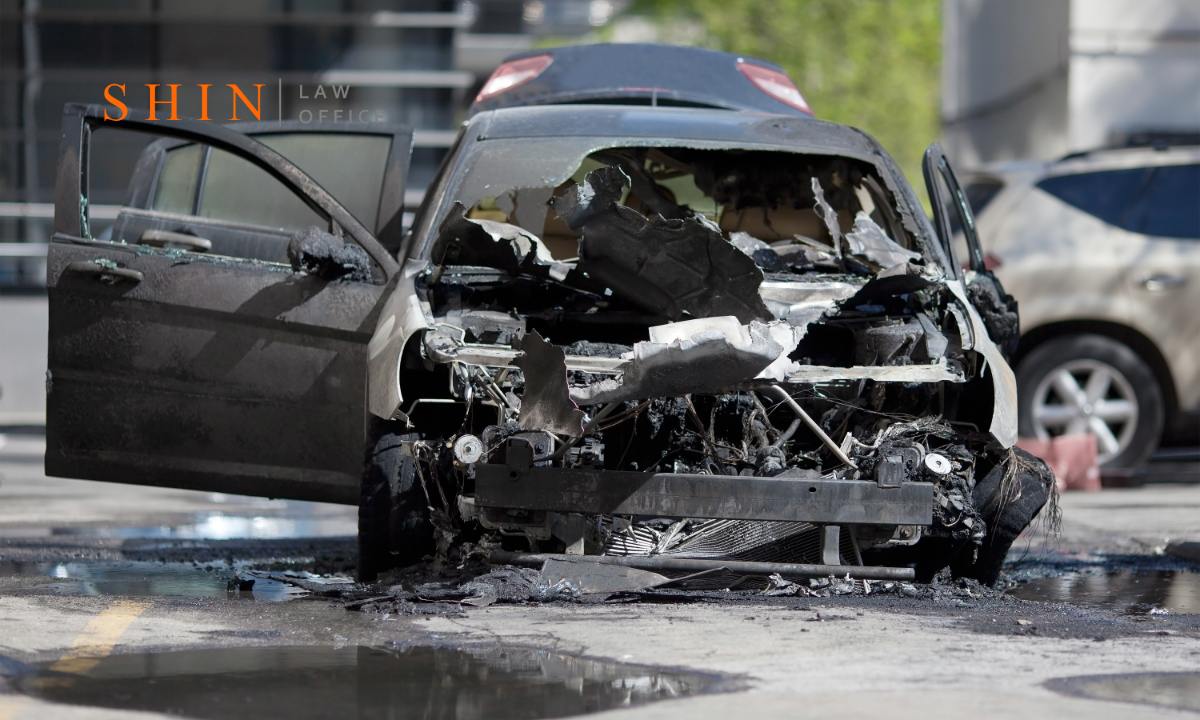
In a recent example, a serious crash occurred at the intersection of Main Street and Burke Station Road in Fairfax City. A vehicle stopped at a red light was struck from behind by a distracted driver who failed to stop in time. The collision caused significant damage to the rear of the victim’s vehicle, illustrating how common driving errors like failing to observe traffic signals and tailgating can lead to serious injury and legal claims.
Just a short drive away on Fairfax County Parkway, another incident involving a drunk driver highlights how dangerous road conditions and irresponsible behavior on local roads can lead to complex injury claims. In that case, the impact was so powerful that the victim’s vehicle spun out and flipped, underscoring both the physical risk to motorists and the legal consequences for negligent drivers.
When crashes result in serious injuries, securing the insurance policy limits or pursuing litigation may be necessary to cover medical expenses, lost wages, and long-term care. Fairfax City car accident cases often involve not just immediate injury claims but also questions about fault, insurance coverage, and potential contributory negligence arguments under Virginia law.
What should I know about pedestrian and bicycle injuries in Fairfax City?
Although Fairfax City has many neighborhoods and commercial corridors, there are still significant pedestrian and bicycle movements, particularly around schools, parks, and shopping areas. Drivers who fail to yield to pedestrians in crosswalks or miss cyclists on shared roadways create dangerous conditions in which serious injuries can occur. One recent example in the broader area reported a pedestrian struck by a car near Tysons’ mixed-use district, resulting in critical injuries and emergency transport to the hospital.
In Virginia, proving pedestrian or bicycle injury claims requires careful documentation of how the accident occurred and establishing that the driver breached their duty of care. If there is any question about whether the pedestrian could have avoided the accident or was partially at fault, the strict contributory negligence rule could bar recovery entirely, making evidence like video footage, witness statements, and scene photos especially important.
How are slip and fall injury claims handled in Fairfax City?
In retail centers, office buildings, apartment complexes, and public walkways around Fairfax City, slip-and-fall incidents are another common personal injury scenario. These accidents often happen when property owners fail to maintain safe walking surfaces, provide adequate warning of hazards, or promptly clean up dangerous conditions.
To pursue a slip and fall claim in Fairfax City, an injured person must show that the property owner knew, or should have known, about the hazard and failed to address it. Liability is not automatic simply because a fall occurred. Evidence such as maintenance logs, videotape, witness statements, and property inspection records can be crucial in establishing negligence.
Premises liability claims often surface in grocery stores, parking lots, restaurant entries, and apartment lobbies. Even seemingly minor hazards, such as an unmarked wet floor or an uneven sidewalk, can cause serious injuries and significant financial losses.
What legal issues apply to dog bite injuries in Fairfax City?
Fairfax City has a high concentration of pet-friendly neighborhoods, parks, and sidewalks, which increases the likelihood of dog-related incidents. Dog bites can cause not only physical trauma but also emotional distress, scarring, infection, and significant medical bills.
Under Virginia law, dog owners can be held responsible if their animal causes injury due to negligent control or lack of reasonable care. In these cases, attorneys may look at prior animal control reports, witness testimony, and veterinary records to determine whether the owner was aware of previous incidents or failed to take appropriate safety precautions.
Dog bite claims in Fairfax City often involve residential neighborhoods, apartment complexes, and parks where pets and people interact regularly.
What other injury categories exist in Fairfax City?
Fairfax City also sees other personal injury issues such as:
- Construction site-related injuries when pedestrians or bystanders are hurt by falling debris, tools, or improperly secured work areas.
- Premises liability injuries beyond slip and fall, such as inadequate security leading to assault or negligent maintenance causing hazards.
- Workplace and third-party injury claims when on-site visitors get hurt due to unsafe conditions on private or commercial property.
Each of these cases involves specific legal strategies and requires careful attention to evidence, fault, and Virginia legal standards that may affect your ability to recover compensation.
How Virginia Law Applies in Fairfax City Injury Cases
Across all these injury types, Virginia’s pure contributory negligence rule plays a major role. If a judge or jury finds that the injured person was even slightly at fault, they may be barred from any recovery. This strict standard means that gathering strong evidence and building a clear narrative of responsibility is essential from the earliest stages of any case. Legal counsel experienced with Fairfax County claims can help ensure deadlines, statutes, and legal strategies are properly handled.
It’s also important to understand that some injury claims may be resolved through settlement negotiations before trial, which can mitigate the risk of a contributory negligence defense and provide compensation more quickly than waiting for a jury verdict.
When injuries happen in Fairfax City, understanding local roads, pedestrian patterns, building maintenance practices, and community norms helps frame legal strategy and improves the chances of a fair outcome. In the next chapter, we’ll dig into personal injury patterns unique to Herndon, with specific examples, local issues, and legal guidance that matter to residents there.
What are the most common personal injury risks in Herndon?

Herndon is a vibrant Northern Virginia community nestled along the Dulles Technology Corridor with a mix of busy roadways, growing residential neighborhoods, popular retail corridors, and outdoor recreation spaces. As the town has grown, so too have the variety and complexity of personal injury cases that arise here.
From pedestrian collisions along Herndon Parkway to slip-and-fall claims at commercial centers, residents and visitors alike need to understand the types of hazards that can lead to serious injury and how Virginia personal injury law applies when someone is hurt through no fault of their own.
How do traffic collisions affect pedestrians and drivers in Herndon?
One of the most common sources of personal injury in Herndon involves motor vehicle collisions and crashes involving pedestrians. Major thoroughfares like Herndon Parkway and nearby SR 228 (Centreville Road) experience heavy commuter traffic, especially during rush hours and near retail areas, increasing the risk of crashes and pedestrian-involved events.
In December 2023, for example, police responded to a crash on Herndon Parkway that left one person with minor injuries and two others hospitalized after a pedestrian-involved collision. Such incidents demonstrate how even in suburban neighborhoods, pedestrian safety remains a serious local concern.
These types of accidents often result in claims for:
- Whiplash and soft-tissue injuries
- Fractures and broken bones
- Traumatic brain injuries
- Loss of income due to missed work
- Pain and suffering
Because these collisions often occur in shared spaces where vehicles and pedestrians interact, determining fault — and making sure contributory negligence does not bar recovery — becomes a central legal issue in Herndon injury claims.
What role does premises liability play in Herndon slip and fall cases?
Herndon’s mix of restaurants, shops, office parks, and apartment complexes means there are many places where slip-and-fall accidents can occur.
A hazard as simple as an unmarked wet floor in a grocery store, an uneven sidewalk in a retail plaza, or inadequate lighting in a parking area can lead to serious injuries, especially for older adults and people carrying heavy loads.
When these incidents occur, the injured person must show that:
- The property owner owed them a duty of care.
- The owner breached that duty by failing to address or warn of a dangerous condition; and
- The breach caused the injury.
Even where responsibility seems clear, injuries can be more complex to prove than they look. Legal defenses such as assumption of the risk and Virginia’s pure contributory negligence rule often come into play, and without experienced legal help, a person may recover nothing even when the property owner was negligent.
What legal factors affect dog bite claims in Herndon?
While Herndon is a welcoming, pet-friendly community, that very friendliness can sometimes lead to dangerous interactions between people and animals. Dog bites and animal attacks can cause significant physical and emotional trauma, including deep lacerations, infection risk, nerve damage, scarring, and anxiety.
In Virginia, owners can be held liable when their animals injure others due to negligent control or failure to prevent foreseeable harm. These claims often involve questions about:
- How the dog was restrained at the time of the incident
- Whether the owner knew of prior aggressive behavior
- Whether proper warnings were provided to visitors
Although specific Herndon dog bite statistics aren’t compiled publicly, dog bites nationwide account for hundreds of thousands of emergency room visits each year, with children especially at risk.
Because these cases often involve homeowners’ insurance policies, working with an attorney early helps ensure that all applicable coverage is explored and that the legal claim is framed correctly from the start.
How do bicyclist injuries occur in Herndon and what should I do?
Herndon is home to sections of the Washington & Old Dominion Trail and other bicycle-friendly routes, making cycling a popular option for recreation and commuting alike. But where cyclists interact with cars, pedestrians, and rapidly changing surfaces, crashes can occur.
Injuries from bicycle collisions often resemble those from pedestrian accidents and can include fractures, road rash, head injuries, and long recovery times. These cases raise similar liability questions about motorist care, roadway design, and whether warnings or protective barriers should have been present.
Commercial and Residential Construction Accidents
Herndon has seen development in mixed-use spaces and residential building projects. Construction site accidents — whether involving falling debris, unsecured tools, or improperly marked hazards — can affect workers and passersby alike.
These accidents often involve multiple responsible parties: general contractors, subcontractors, property owners, and maintenance crews, making legal and insurance issues more complex. Careful investigation is crucial to identifying all potentially negligent parties and maximizing the injured victim’s chances of a fair recovery.
Rideshare and Transportation-Related Crashes
With the popularity of rideshare services like Uber and Lyft, Herndon sees its share of transportation-related injury claims involving drivers, passengers, and third parties. These cases often involve complex questions about:
- Who was driving at the time of the crash
- Which insurance policies apply (personal vs. rideshare company)
- The severity and scope of injuries
Because insurers sometimes try to shift blame or minimize responsibility based on policy limits or driver status, these cases require careful legal navigation.
How Virginia Law Shapes Injury Claims in Herndon
Across all of these injury types, three key elements of Virginia law influence outcomes in Herndon:
Pure Contributory Negligence: As with the rest of the Commonwealth, if an injured person is even slightly at fault for their own injury, they may be barred from any recovery. This makes evidence gathering and early legal strategy essential.
Statute of Limitations: Most personal injury claims must be filed within two years of the injury under Virginia Code § 8.01-243, or the legal right to compensation is lost.
Duty and Breach of Duty: In every case, the injured person must clearly show that a legal duty was owed and breached. Whether it’s a driver failing to yield, a property owner ignoring a hazard, or an employer failing to secure a construction site, establishing the duty and linking it to the injury are central to success.
These legal standards apply equally in Herndon and often determine whether an injury claim succeeds or fails.
Real Herndon Injury Examples You Should Know
Herndon has seen serious pedestrian-involved crashes requiring hospital care. For example, in late 2023, Herndon police responded to a collision that injured multiple people when pedestrians were struck on Herndon Parkway, underscoring how local intersections and shared roadways can pose danger when traffic control and visibility issues combine.
Another example from years past involved a stolen pickup truck that crashed into a minivan during a police chase, leaving several people — including children — with serious injuries. While not a typical crash scenario, this case highlights how rescue, litigation, and compensation processes can become highly complex when negligence and criminal conduct collide.
Summary
Herndon’s mix of commuter roads, residential areas, parks, and commercial spaces creates a broad range of places where injuries can occur. Whether it’s a pedestrian crash, a slip and fall at a shopping center, or a bicycle collision on a popular trail, understanding the patterns of risk and how Virginia personal injury law applies here can make all the difference when you or someone you care about suffers harm.
In the next chapter, we’ll explore personal injury issues in Vienna, Virginia, another Fairfax County community with its own set of common accident types and legal considerations.
What types of injuries do people in Vienna commonly face?

The town of Vienna, Virginia is one of Fairfax County’s most vibrant and walkable communities. With historic neighborhoods, busy commuter routes, and popular commercial areas along Maple Avenue (Route 123), Vienna is a wonderful place to live and visit — but it also brings distinct patterns of injuries that require careful legal understanding.
In this chapter, we’ll explore the most common types of personal injury claims in Vienna, the local risk factors, how Virginia law applies to these claims, and real local examples that show how accidents happen and how legal claims can unfold.
Where do motor vehicle accidents occur most often in Vienna?
Vienna is surrounded by major roadways that funnel daily commuters through the town. Maple Avenue (Route 123), Nutley Street, and nearby segments of Interstate 66 and the Dulles Toll Road all contribute to heavy traffic volumes and common vehicle crashes. Multiple local law firms note that these major travel arteries, especially near intersections with Nutley Street and Park Street, are common sites for serious collisions.
A recent crash in Vienna on Maple Avenue illustrates how quickly everyday driving can turn dangerous. A driver lost control of a vehicle in the 800 block of Maple Avenue East and crashed into a utility pole, causing power outages and significant traffic disruption. The driver was ultimately cited for reckless driving, illustrating how negligent operation can lead to criminal charges and, if injuries had occurred, to personal injury claims.
These incidents lead to cases involving:
- Rear-end collisions where one vehicle strikes another from behind
- Intersection crashes caused by red-light or stop-sign violations
- Single-vehicle accidents where drivers lose control due to distraction or speed
- High-speed commuter crashes on adjacent highways
Injury victims in these crashes may face broken bones, soft-tissue injuries, shoulder or neck trauma, spinal injuries, or worse. Proving fault — especially in cases where multiple vehicles are involved — requires careful investigation. Because Virginia follows a pure contributory negligence rule, even momentary distraction on the part of an injured driver can bar recovery entirely.
How are pedestrian and cyclist injuries handled legally in Vienna?
Vienna is a town with a strong pedestrian presence. Downtown Vienna, with its restaurants, community events, and walking paths, attracts foot traffic from residents and visitors alike. As a result, pedestrian accidents are a real risk. Pedestrians struck by vehicles often suffer serious injuries, including fractured limbs, back trauma, concussions, and other long-term disabilities.
To pursue these claims, an injured pedestrian must clearly show that a driver breached the duties owed under Virginia law — often by failing to yield right-of-way or disregarding traffic signals. Because insurance companies frequently argue that a pedestrian was distracted or failed to use a crosswalk, collecting evidence such as traffic camera footage and witness statements is crucial.
Similarly, bicyclists share roadways with cars in Vienna and are exposed to collision risks when motorists fail to give adequate space or ignore cyclist rights. These crashes often result in significant orthopedic and head injuries and require an early legal strategy to ensure liability is established accurately.
What are common slip and fall causes in Vienna injury claims?
Vienna’s commercial areas — especially around shopping centers, grocery stores, and restaurants — see heavy foot traffic. Slip and fall accidents can happen at any time due to:
- Wet floors without proper warnings
- Uneven sidewalks or cracked pavement
- Poor lighting in parking lots or walkways
In Virginia, a property owner may be liable only if they knew or should have known about a dangerous condition and failed to address it. Because many slip and fall claims become disputes of notice and reasonable care, early documentation and testimony are vital.
Although Vienna-specific slip and fall news reports are limited, similar suburban communities in Fairfax County routinely see these claims in retail settings, and they can involve serious injuries ranging from wrist fractures to significant head trauma.
What legal consequences arise from alcohol-related crashes in Vienna?
The presence of nightlife, restaurants, and late-night traffic in and around Vienna creates a heightened risk of crashes involving alcohol impairment. When drivers are under the influence, the severity of collisions tends to be higher, leading to complex injury claims and potential punitive considerations under Virginia law when gross negligence is demonstrated.
In one Vienna-area case, a rear-end collision caused by a drunk driver resulted in multiple injured people, including serious injuries that required extensive treatment. The legal focus in such cases often turns on securing multiple insurance policies and determining the appropriate sources of compensation for each victim.
Teen Driving Crashes with Fatal and Severe Injuries
Tragically, some of the most serious cases in Vienna involve young drivers under the influence of speed or inexperience. In one notable crash, a teenage driver collided with another vehicle, resulting in the death of a 77-year-old Vienna resident and life-altering injuries to others. The driver was later charged with reckless driving and involuntary manslaughter, underlining how criminal charges and personal injury claims can intersect after fatal or catastrophic crashes.
These kinds of cases often lead to wrongful death actions, where surviving family members seek compensation for funeral costs, loss of companionship, and other damages.
Rideshare and Transportation-Related Personal Injuries
Vienna residents and visitors commonly use rideshare services such as Uber and Lyft, given the town’s proximity to D.C. and local transit stops. While these services provide convenience, accidents involving rideshare drivers sometimes raise additional legal questions about who was driving, which insurance policy applies, and how liability is structured. Careful investigation and policy interpretation become key factors in resolving damages in such cases.
How Virginia Law Shapes Vienna Injury Claims
Across all of these scenarios, three legal principles are especially important:
Pure Contributory Negligence
If an injured person is found even slightly at fault for their own injury, Virginia law typically bars recovery. This strict rule makes evidence collection and expert analysis essential from the start of any case.
Statute of Limitations
Most personal injury claims in Virginia must be filed within two years from the date of the injury, or the legal right to seek compensation is lost.
Duty and Breach Standards
Whether a claim involves a car accident, a pedestrian collision, or a slip-and-fall, the plaintiff must show that the responsible party owed a duty of care and breached it, resulting in injury.
These legal standards apply uniformly across Vienna and the rest of Fairfax County, but how they are applied often depends on local road conditions, traffic patterns, and pedestrian usage.
Summary
Vienna’s unique mix of historic charm, active town life, and proximity to major commuter routes creates both everyday opportunities and everyday injury risks. Understanding common injury types, from car and pedestrian collisions to reckless driving and slip-and-fall hazards, helps residents and visitors alike recognize the legal actions available when accidents occur.
In the next chapter, we’ll explore Reston’s personal injury patterns, where recreational spaces, construction zones, and transit corridors present their own challenges and legal considerations.
What kinds of injury claims are common in Reston?
Reston is a unique Fairfax County community known for blending urban development with scenic parks, extensive bicycle and walking trails, busy roadways, and numerous employment hubs. While this mix makes Reston a great place to live and work, it also means there are many environments where injuries occur — from car crashes on major roads to slip and fall incidents in shopping areas and bike accidents near recreational trails.
In this chapter, we’ll explore the most common types of personal injury cases in Reston, what local conditions contribute to these incidents, how Virginia personal injury law applies, and real-world examples that illustrate how these claims unfold.
What are the main causes of motor vehicle accidents in Reston?
One of the most frequent personal injury issues in Reston involves motor vehicle accidents. With busy corridors like Reston Parkway (SR 602), Baron Cameron Avenue, Sunrise Valley Drive, and the adjacent Dulles Toll Road, traffic patterns here can be complex and congested, especially during rush hours. These roads connect Reston to other parts of Fairfax County and Northern Virginia, increasing both commuter volume and crash risk.
Car drivers, truck operators, rideshare vehicles, and even motorcyclists are all part of Reston’s traffic mix. When accidents occur, victims commonly suffer injuries ranging from whiplash and soft tissue trauma to broken bones, spinal injuries, and traumatic brain injuries. Recovering fair compensation for these losses usually starts with proving the other driver’s negligence — including breach of duty of care and ensuring that the injured party was not at fault in any way, given Virginia’s strict contributory negligence rule that can bar recovery if a plaintiff is even slightly responsible for the crash.
How do pedestrian and bicycle collisions happen in Reston?
Reston’s design encourages walking and cycling, including use of local streets and access to multi-use trails like the Washington and Old Dominion (W&OD) Trail. However, where pedestrian and bicycle traffic mixes with vehicles, injury risk increases. Pedestrian accidents can occur near Reston Town Center, the Wiehle-Reston East Metro station, and around retail areas where foot traffic is heavy. Bicycle riders face hazards when vehicles fail to provide adequate space or when road conditions are unsafe.
Bicycle crashes in particular can lead to serious harm including:
- Concussions and traumatic brain injuries
- Fractures and road rash
- Internal injuries and soft tissue damage
These injuries can have long-term physical and emotional consequences, including anxiety and post-traumatic stress when cyclists fear returning to the road after a crash.
What should Reston residents know about slip and fall injuries?
Slip and fall accidents are another common type of Reston personal injury claim. These can happen at:
- Grocery stores
- Office parks
- Restaurant entrances
- Apartment complexes
- Public walkways and parking lots
Common injuries in slip and fall incidents include fractures, head injuries, back and spinal damage, and soft tissue injuries. Virginia premises liability law requires a person injured on someone else’s property to prove that the property owner knew (or should have known) about the hazardous condition and failed to fix it or warn about it. Because Virginia courts apply pure contributory negligence even in slip and fall cases, an injured person must show they did not contribute in any way to their fall.
What workplace and construction injury claims occur in Reston?
Reston is home to office parks, retail centers, and ongoing development projects. Those environments pose risks of job-related and construction injuries. While workers’ compensation often covers workplace injuries, some incidents especially those involving third parties (like negligent contractors or property owners) can give rise to separate personal injury claims in addition to workers’ compensation benefits.
Common scenarios include:
- Falls from height
- Struck by falling object
- Machinery accidents
- Exposure to unsafe conditions
These cases frequently require investigation into safety practices, contractor responsibilities, and liability beyond the employer-employee relationship.
How do dog bite claims and other animal injuries work in Reston?
While Reston is a community with many pet owners and dog friendly spaces, dog bites and animal attacks still happen and can result in serious physical and emotional harm. Animal bite claims require showing that the owner failed to control the animal or prevent a foreseeable harm. In Virginia, the stricter contributory negligence standard also applies here — which means victims must prove they were not partially at fault to recover compensation.
Other Personal Injury Issues in Reston
Personal injury cases in Reston also include:
- Catastrophic injuries including paralysis or permanent disability
- Rideshare accidents involving Uber or Lyft drivers and passengers
- Wrongful death claims in fatal crashes
- Defective product injuries from unsafe products used or sold in the community
Experienced personal injury attorneys in the area emphasize the importance of early legal involvement due to Virginia’s strict fault standards and the complexity of establishing liability in many of these scenarios.
How Virginia Law Applies in Reston
Across all injury types in Reston, key legal principles shape how claims are handled:
Pure Contributory Negligence
Virginia’s rule bars recovery if the injured person is even slightly at fault for causing their own injury. This rule makes it critical to collect substantial evidence early and work with legal professionals who know how to protect plaintiffs from unfair fault arguments.
Statute of Limitations
Most personal injury lawsuits, including car accidents, slip and fall, and bicycle injuries, must be filed within two years from the date of injury, or the right to recover damages is lost.
Duty and Breach
Whether the claim involves a reckless driver, negligent property owner, or unsafe working conditions, the injured person must establish that the responsible party owed a duty, breached it, and that breach caused the injury.
These standards are foundational to Reston injury claims and apply uniformly across all injury types, although the facts and contexts vary widely based on where and how the injury occurred.
Summary
Reston’s mix of urban roads, trails, workplaces, parks, and commercial centers creates diverse environments where injuries happen. Whether it’s a serious car crash on a busy roadway, a slip-and-fall in a shopping area, or a bicycle collision on shared pathways, understanding local patterns and legal standards is essential to securing compensation after an injury.
In the next chapter, we’ll shift our focus to Springfield personal injury issues — another major Fairfax County community with its own unique risks, traffic patterns, and legal considerations.
Why do so many personal injury claims arise in Springfield?

Springfield, Virginia, located in Fairfax County, is a busy commuter community at the crossroads of some of the most complex road systems in Northern Virginia. With major interchanges like the Springfield Interchange (also known as the Mixing Bowl) and heavy traffic on I-95, I-395, and I-495, residents and commuters face a higher probability of serious vehicle collisions and other personal injury incidents. These situations often lead to complicated legal claims that require clear evidence, strong legal strategy, and careful handling of Virginia’s strict contributory negligence rules.
In this chapter, we’ll break down the common personal injury patterns in Springfield, the local dynamics that contribute to them, real incident examples, and how Virginia law applies to these claims.
How do major highways and interchanges contribute to Springfield injuries?
One of Springfield’s defining characteristics is its dense highway network and commuter traffic. The Springfield Interchange, where I-95, I-395, and I-495 converge, is consistently one of the highest crash areas in the region due to:
- Complex merges
- Short decision windows
- Heavy truck and commuter traffic
- Frequent lane changes
- Congestion and speed variations
These traffic conditions contribute to rear-end crashes, multi-vehicle pileups, sideswipe collisions, and serious injury crashes that send people to the hospital. Across Fairfax County as a whole, 12,538 traffic crashes were reported in 2023, resulting in over 5,700 injuries and 42 fatalities, highlighting how dangerous these roads can be for motorists and passengers alike.
Because Springfield essentially sits at the heart of this network, many injury claims originate from high-speed collisions on or near these interstates. Claims often involve:
- Whiplash and soft tissue injuries
- Broken bones and fractures
- Spinal cord injuries
- Traumatic brain injuries
- Wrongful death actions
In these cases, proving negligence usually requires showing that the other driver breached their duty of care — for example, by speeding, failing to signal, or driving distracted — and that the breach caused the accident. Under Virginia’s pure contributory negligence doctrine, if the injured person is even slightly at fault, they could be barred from recovery, which makes early evidence gathering and reconstruction crucial.
What pedestrian and intersection crashes happen in Springfield?
Springfield isn’t just highways. It also has busy surface streets, shopping centers like Springfield Town Center, and residential areas where pedestrians and vehicles interact. Crosswalk collisions, mid-block incidents, and parking-lot crashes are part of the mix.
While specific pedestrian fatality data for Springfield isn’t always reported in local news, broader Virginia traffic statistics show that pedestrian injuries statewide increased significantly in recent years. In 2024, Virginia recorded 1,719 pedestrian injuries in traffic crashes across the state, underscoring pedestrian safety as a key local concern.
Pedestrian accident cases can involve:
- Failing to yield at crosswalks
- Distracted driving
- Poor lighting and sightline issues
- Speeding in residential zones
Establishing fault and defending against assertions of contributory negligence — such as claims that a pedestrian should have used a designated crossing — are common legal challenges in these cases.
How do construction zone and work zone injuries occur there?
Springfield’s location near major highways and growth corridors means there’s frequent roadwork and construction activity. Work zone injuries can involve both workers and motorists when:
- Traffic control devices are improperly placed
- Barriers and signage are inadequate
- Road surfaces are left unsafe
- Vehicles crash into cones, barrels, or crew areas
In such situations, liability may extend beyond the driver to construction companies, subcontractors, and government agencies responsible for work zone safety. These cases frequently require careful investigation to identify all potentially negligent parties and applicable insurance coverage.
What should you know about wrongful death cases in Springfield?
Unfortunately, some of the most serious personal injury cases in Springfield involve fatalities. High-speed interstate collisions, multi-vehicle pileups, and impaired driving crashes can result in loss of life and bring forward wrongful death claims.
In addition to highway collisions, Springfield has been the site of other serious and tragic incidents. One historically notable case, though not a typical traffic crash, involved the police shooting of John Geer in Springfield, where a fatal use of force by law enforcement prompted a civil lawsuit against county authorities that resulted in a multi-million dollar settlement for the family.
Civil claims after fatal crashes or wrongful deaths typically seek compensation for:
- Funeral and burial expenses
- Loss of financial support
- Loss of companionship
- Pain and suffering and emotional distress
- Punitive damages in cases of gross negligence
These claims are subject to the same two-year statute of limitations under Virginia Code § 8.01-243 as other personal injury cases, making prompt action essential.
Fatal Crash Examples in and Around Springfield
While not every incident is reported publicly, recent news in Fairfax County shows the ongoing risk of serious injury and death from traffic collisions. For example, a multi-vehicle crash on Route One in Fairfax County killed a taxi driver and critically injured others when his vehicle collided with a minivan and a Metrobus, underscoring the severity of high-impact collisions in busy county streets.
Similarly, county-level crash data indicate that factors like speeding, distracted driving, and alcohol involvement continue to contribute significantly to serious accidents, with hundreds of alcohol-related crashes reported annually in Fairfax County alone.
These examples highlight the real, human consequences of negligent driving and unsafe conditions in high-traffic communities like Springfield.
How Virginia Law Applies in Springfield Injury Claims
Several aspects of Virginia personal injury law strongly influence how claims in Springfield unfold:
Pure Contributory Negligence
Virginia’s strict rule means even a minor fault on the part of the injured person can bar recovery. This makes thorough evidence preservation and legal strategy essential from the earliest stages of every case.
Statute of Limitations
Under Virginia Code § 8.01-243, most personal injury and wrongful death suits must be filed within two years of the date of injury or death, or the right to compensation is permanently lost.
Burden of Proof
Whether the case involves a car crash, pedestrian accident, or work zone injury, the claimant must show that:
- A duty of care was owed;
- The duty was breached;
- The breach caused the injury; and
- The injury resulted in measurable damages.
In high-volume corridors like Springfield’s highways, proving breach and causation often means working with accident reconstruction experts, medical professionals, and traffic engineers.
Summary
Springfield’s location within one of Virginia’s busiest traffic networks creates unique personal injury risks, especially related to highway and commuter accidents. From severe interstate collisions to pedestrian and construction zone injuries, understanding local risk patterns and how Virginia personal injury law applies can make a major difference for injured individuals and families seeking compensation.
In the next chapter, we’ll focus on McLean and Tysons Corner personal injury issues, including how high-traffic commercial zones and local road patterns contribute to injury risk and legal claims.
What are the main injury patterns in McLean and Tysons Corner?

McLean and the nearby Tysons Corner area stand out in Fairfax County as high-traffic, commercial, and residential hubs where personal injury incidents occur for many of the same reasons they occur county-wide — heavy roadways, dense pedestrian activity, ongoing development, and mixed-use environments. Yet McLean and Tysons have distinct injury patterns reflecting their unique blend of commuter traffic, high-speed roads, retail centers, and urban-like amenities.
In this chapter, I’ll walk through the most common personal injury issues in McLean and Tysons Corner, why they happen here, how Virginia law shapes claims, and real examples that help you visualize how these injuries unfold in everyday life and legal practice.
Why do car collisions happen frequently on McLean and Tysons roads?
McLean and Tysons Corner are central nodes in Fairfax County’s road network. Key corridors such as Dolley Madison Boulevard, Chain Bridge Road, Old Dominion Drive, and nearby sections of I-495 (Capital Beltway) and Dulles Toll Road funnel local, commuter, and interstate traffic through these communities. Heavy volumes and complex merges near Tysons regularly contribute to collisions involving cars, trucks, and motorcycles.
Fairfax County as a whole reported over 12,500 traffic crashes in 2023, resulting in more than 5,700 injuries, underscoring the pervasive motor vehicle injury risks on major Fairfax roadways, including those in McLean and Tysons.
In McLean specifically, intersections such as Dolley Madison Boulevard at Old Dominion Drive frequently see rear-end, angle, and sideswipe collisions that injure drivers and passengers. These incidents commonly produce soft tissue injuries, back and neck trauma, and fractured bones. A passenger in one of these crashes may seek compensation from the at-fault driver’s insurance, and even from the driver of the vehicle they were riding in under certain circumstances, given Virginia’s liability principles.
How are pedestrian injuries handled near Tysons shopping and office areas?
Pedestrian and cyclist injuries are increasing across Fairfax County, and McLean and Tysons are no exception. Dense walkable areas around Tysons Corner Center and office clusters in McLean attract foot traffic, especially during business hours, lunch periods, and weekends. Pedestrians are struck when vehicles fail to yield at crosswalks, make unsafe turns, or ignore signals.
Local reports confirm that pedestrians in Tysons have been critically injured in crosswalk collisions, such as one in May 2025 where a pedestrian was struck at Westwood Center Drive and Cornerstone Boulevard and hospitalized in life-threatening condition.
Northern Virginia crash trend data also reflect a worrying pattern: pedestrian and cyclist injuries occur frequently, especially later in the afternoon and evening hours, when visibility is reduced and traffic volumes are high.
Given this environment, pedestrians and cyclists in McLean or Tysons who are injured due to a driver’s negligence may face complex liability disputes. Drivers often argue that pedestrians entered a roadway unsafely or ignored signals. In Virginia, any showing that the pedestrian bore even slight responsibility could bar recovery under the state’s pure contributory negligence rule.
What premises liability and slip and fall risks exist in these areas?
Tysons Corner Center, Tysons Galleria, and McLean’s retail areas are bustling with shoppers and visitors every day. Slip-and-fall accidents can occur inside stores, on mall corridors, in parking areas, or on adjacent sidewalks if property owners fail to maintain safe surfaces, clear hazards, or provide adequate warnings.
These incidents frequently involve injuries such as sprains, fractures, and head trauma. They are often the basis for premises liability claims, in which the injured person must establish that the property owner knew or reasonably should have known about the hazard and failed to fulfill their duty to address it.
Premises liability claims around McLean and Tysons regularly look at maintenance records, inspection logs, and witness accounts to determine notice and responsibility — and even these cases can be derailed if a defense can show the injured person contributed to their own fall.
What are the legal questions in rideshare and transportation injury claims?
McLean and Tysons also see significant use of rideshare services, which can lead to complex personal injury scenarios. Accidents may involve:
- Rideshare drivers picking up or dropping off passengers
- Collisions between rideshare vehicles and others
- Injuries to pedestrians or cyclists involving a rideshare vehicle
Legal questions in these situations often turn on whether the driver was operating under the rideshare app at the time of the crash and which insurance coverage applies. These cases demand careful analysis to ensure injured parties receive full compensation.
Construction Site and Development-Related Injuries
Ongoing development near McLean and Tysons — including office parks, residential buildings, and transportation infrastructure projects — increases the risk of construction-related injuries for both workers and bystanders.
Common scenarios include falls from heights, being struck by objects, and unsafe site conditions. Construction injury claims often involve multiple potentially liable parties, including general contractors, subcontractors, and property owners, and they may intersect with workers’ compensation claims when employees are injured on the job.
Separate third-party claims can arise—for example, if a passerby is injured by falling debris in a public area adjacent to a job site.
How Virginia Law Applies in McLean and Tysons Claims
Across McLean and Tysons Corner, the same critical legal principles that govern personal injury throughout Virginia apply:
Pure Contributory Negligence
Virginia’s strict rule bars recovery if the injured person is even slightly at fault for an accident. This means that proof of negligence by the other party — and lack of fault on the claimant’s part — is essential in car crash, pedestrian, bicycle, slip and fall, and construction accident claims.
Statute of Limitations
Most personal injury lawsuits must be filed within two years of the injury under Virginia Code § 8.01-243, or the right to damages is lost.
Duty and Breach
In every injury claim, the injured person must show the responsible party owed them a duty of care, breached it, and that breach caused the injury. Whether the case involves a negligent driver or a property owner who failed to maintain safe conditions, proving these elements is essential.
Local Injury Patterns and Why They Matter
McLean’s high-speed roadways and Tysons’s busy pedestrian corridors reflect broader traffic injury trends seen across Fairfax County. County crash data show ongoing challenges with pedestrian and vehicle collisions, especially in areas with heavy traffic, limited lighting, and complex intersections.
Pedestrian and cyclist risks have grown in recent years, with fatalities and serious injuries rising throughout the county, emphasizing the importance of safe roadway design, driver vigilance, and robust legal support for injury victims.
Summary
McLean and Tysons Corner feature a mix of urban-style traffic, heavy commuter traffic, retail concentrations, and ongoing development, contributing to a wide range of personal injury incidents. From severe motor vehicle collisions on major thoroughfares to pedestrian injuries near office and shopping centers, these communities face unique injury challenges — and their residents need to understand both where risks arise and how Virginia’s legal rules affect their ability to recover compensation.
In the next chapter, we’ll look at unincorporated areas of Fairfax County, including places like Oakton, Annandale, and Fairfax Station, where injury issues reflect everyday life in more residential settings, yet still demand strong legal understanding.
What personal injury risks do unincorporated Fairfax County communities face?

Fairfax County’s incorporated towns like Fairfax City, Herndon, Vienna, Reston, Springfield, McLean, and Tysons are well known. But unincorporated communities and census-designated places across the county also see a wide range of personal injury incidents. Areas like Oakton, Annandale, Fairfax Station, Farrs Corner, and Odricks Corner are best described as “everyday” neighborhoods — quiet residential streets, local businesses, parks, and community schools — yet injury risks still arise in predictable ways that reflect local traffic, property conditions, and lifestyle patterns.
Unincorporated communities are governed directly by Fairfax County, meaning roads, parks, and public spaces are often maintained by county agencies. These areas blend suburban living with commuter traffic, and that combination can produce everyday but serious injury risks that merit understanding — especially when the legal consequences of an injury depend on strict Virginia personal injury law standards.
How do traffic and pedestrian injuries occur on major suburban roads?
Across unincorporated Fairfax County, traffic and commuter roads serve as stages for many injury incidents. Roads like Route 50, Lee Highway (Route 29), and Ox Road (Route 123) carry heavy commuter traffic. Intersection collisions, rear-end crashes, and speeding-related injuries are common even far from dense urban centers.
A continuing public health concern is pedestrian safety in these parts of the county. Fairfax County averages about 172 crashes involving pedestrians each year, many occurring on major suburban roads where sidewalk gaps and higher speeds create risk for people walking or biking.
These injury patterns match what we see countywide: highways and commuter rural collectors mix with residential streets, and when negligent drivers — whether distracted, impaired, or speeding — enter these zones, serious collisions occur with residents, guests, and visitors.
What slip and fall and premises liability issues happen in residential zones?
Unincorporated commercial centers and residential clusters also experience common slip-and-fall incidents. These can happen in places like grocery store parking lots, apartment building entrances, playgrounds, and public sidewalk areas outside private or county property.
Property owners — whether commercial landlords or HOAs — have a duty to maintain safe conditions and warn visitors of hazards. Establishing that duty and breach is essential. For example, an unlit or uneven sidewalk outside a community shopping area can be a basis for a premises liability claim if the owner knew or should have known about it and failed to act.
How do animal-related injuries arise in these neighborhoods?
Dog bites and other animal attacks occur even in these quieter neighborhoods. Local county ordinances require owners to leash and control animals, and failure to do so can expose an owner to liability. While Virginia’s dog bite laws can vary, many claims hinge on whether the owner knew or should have known about a dog’s dangerous tendencies.
When can workplace or third-party injury claims arise in these areas?
Many unincorporated areas are near shopping centers, light industrial parks, and evolving commercial zones. Construction and workplace injuries here can involve:
- Falls from ladders or roofs
- Machinery or tool accidents
- Unsafe worksite conditions
Workplace accidents are often covered by workers’ compensation, but third-party personal injury claims can arise when a negligent contractor, site owner, or equipment manufacturer contributes to the harm.
Real Community Injury Examples
While exact case names from these areas may not always be publicly reported, injury patterns are reflected in larger regional data. For example, pedestrian fatalities across Fairfax County have sometimes exceeded motor vehicle homicides, reflecting how dangerous vehicle-pedestrian interactions can be even outside dense urban cores.
Local unincorporated intersections along major corridors, such as Route 50 near Oakton or Maple Place in Annandale, have been sites of crashes that result in emergency medical response and legal claims, including incidents in which vehicles struck pedestrians or bicycles on local roads.
Legal Context: Virginia Law in Unincorporated Areas
In unincorporated Fairfax County — just like in the towns and cities — Virginia personal injury law applies the same strict standards:
Pure Contributory Negligence
If you are even slightly at fault for your own injury, you may be barred from recovery. This rule applies across all personal injury claims in Virginia, whether in Fairfax Station, Annandale, or another unincorporated community.
Statute of Limitations
Most personal injury lawsuits must be filed within two years of the date of the injury. If you wait too long, you lose your right to pursue compensation.
Notice Requirements for Government Claims
If your injury involves county property, sidewalks, or roads maintained by Fairfax County, additional steps may be required, including written notice to the county within a shorter timeframe before filing a lawsuit.
Why This Matters for Unincorporated Area Residents
Residents of unincorporated Fairfax County are often surprised to learn that even on suburban roads and quiet neighborhood streets, serious personal injury risks exist — and that the legal hurdles in Virginia are among the strictest in the nation. Whether it’s a pedestrian struck while crossing an arterial road, a slip and fall at a local business, or a workplace accident involving a third party, understanding both local conditions and Virginia law is essential to protecting your rights.
In the next chapter, we’ll take a deeper look at Virginia law principles that shape personal injury claims throughout Fairfax County, including contributory negligence, statute of limitations, and damages.
How does Virginia’s contributory negligence rule affect injury claims?

When someone is injured in Fairfax County — whether in a crash on I-66, a pedestrian collision near Tysons Corner, a slip and fall in a grocery store parking lot, or a bicycle accident on a local trail, the legal rights and outcomes depend heavily on the nuances of Virginia personal injury law. Fairfax County local context matters, but the rules of the road in the courtroom are set by state law.
In this chapter, we’ll explore the most important Virginia legal principles that shape personal injury claims, including:
- The pure contributory negligence rule
- The statute of limitations
- The last clear chance doctrine
- Wrongful death timing
- What happens if government entities are involved
Understanding these legal doctrines will help you make sense of why early legal strategy is so crucial in injury cases here, and why evidence must be collected promptly and carefully.
1. Pure Contributory Negligence: Virginia’s Strict Fault Rule
Virginia’s negligence law is very different from most other states. In most U.S. states, if an injured person shares fault for an accident, their damages are reduced proportionally under comparative negligence rules. But not in Virginia.
Under Virginia’s pure contributory negligence doctrine, an injury victim cannot recover any compensation if they are even 1% at fault for the accident. This rule applies to virtually all personal injury cases, including car crashes, pedestrian and bicycle injuries, slip-and-fall claims, and many others. The injured person must show that the other party was 100% responsible for causing the injury.
Put simply:
- If a driver ran a red light and hit you, but a jury finds you even minimally at fault, for example, because you were slightly over the speed limit, you cannot recover damages under ordinary negligence rules.
- This all-or-nothing standard is rare among U.S. states and often cited as one of the harshest negligence rules in the country.
The Supreme Court of Virginia grounded this rule in long-standing case law and it has endured over decades as part of the state’s common law negligence framework.
What is the statute of limitations for personal injury lawsuits in Virginia?
Once you know who caused your injury, you also need to act quickly. Virginia imposes a strict deadline for filing personal injury lawsuits.
Under Virginia Code § 8.01-243, most personal injury actions must be filed within two years of the date the injury occurred. If you wait even one day too long, the court will almost always dismiss your case and you lose your right to seek money for your injuries, medical bills, lost wages, and other damages.
This two-year rule applies to:
- Car accidents
- Slip and fall injuries
- Bicycle and pedestrian injuries
- Most other negligence claims
Are there exceptions to Virginia’s statute of limitations rule?
There are very limited exceptions (for example in some medical malpractice discovery rule situations or latent injuries), but generally the statute runs from the day of the injury.
If the case involves a wrongful death claim, a similar two-year deadline applies under Virginia Code § 8.01-244, measured from the date of death.
Missing these deadlines usually means no lawsuit at all, even if the other party’s fault is clear.
What legal doctrines such as last clear chance might apply in Virginia personal injury cases?
Because Virginia’s contributory negligence rule can entirely bar recovery if the plaintiff shares any fault, courts have applied a doctrine called the last clear chance doctrine in very limited situations.
The last clear chance doctrine allows an injured person who may have been negligent to recover if they can prove that:
- They were negligent and placed themselves in a situation of peril;
- The defendant saw or should have seen their peril; and
- The defendant had a final opportunity to avoid the harm by using ordinary care but failed to do so.
This exception doesn’t apply in every case, and the burden to show a last clear chance opportunity is high, but Virginia courts have recognized it as a way to overcome the strict contributory negligence bar under the right facts.
How do government notice rules affect injury claims against public entities?
If your injury involves a government-maintained road, sidewalk, park, or county property, there are additional procedural requirements. You may need to provide formal written notice to the county or state within a short time period before filing a claim. Failing to provide timely notice can effectively prevent you from suing the government entity under Virginia law, even if the fault is clear.
These notice requirements are separate from the ordinary two-year statute of limitations and must be followed strictly.
What kinds of damages are available under Virginia personal injury law?
Virginia allows injured plaintiffs to recover:
- Economic damages (medical bills, lost wages)
- Non-economic damages (pain and suffering)
But for cases involving gross negligence or malicious conduct, punitive damages may be available — though they are capped (for example, punitive damages are generally capped at $350,000 in total across all claims).
Contributory Negligence: Jury’s Role and Other Exceptions
In many Virginia injury cases, the question of whether the injured person was negligent at all is for the jury to decide. Virginia judges instruct juries on the pure contributory negligence rule and leave it to them to determine whether the plaintiff’s actions contributed to the accident.
There are also rare statutory exceptions to pure contributory negligence for certain types of claims — for example, employees of common carriers who are injured on the job may recover even if they contributed to their own harm, though damages may be diminished.
Putting It All Together
Virginia’s legal standards make personal injury claims more challenging than in many other states:
- The pure contributory negligence rule means you must show the other party was entirely at fault.
- You generally have two years to file a lawsuit or you lose your right to compensation.
- Limited exceptions, such as the last clear chance, can apply, but only in narrow circumstances.
These rules underscore why early legal involvement is crucial. Gathering evidence quickly, documenting your injuries, and developing a clear legal strategy soon after an accident gives you the best chance to overcome defenses and protect your rights under Virginia law.
What should I do immediately after I’m injured in Fairfax County?

Getting hurt in an accident, whether as a driver, pedestrian, bicyclist, or visitor to a property, can be overwhelming. You may be dealing with pain, medical bills, missed work, and stressful insurance messages. But what you do right after the incident can significantly affect your ability to recover compensation under Virginia law — especially with our strict contributory negligence rule and tight filing deadlines.
This chapter provides practical, step-by-step guidance on how to respond after an injury in Fairfax County to protect your legal rights and strengthen your personal injury claim.
Why is seeking medical attention right away so important?
Your health is the #1 priority. Even if your injuries seem minor at first, symptoms like neck or back pain, dizziness, or numbness can indicate something serious. Getting prompt medical evaluation:
- Ensures your injuries are treated early
- Creates a medical record linking the accident to your harm
- Shows insurers and courts that you took your injury seriously
Medical records are some of the most important evidence in a personal injury claim because they document what was wrong and how your injury has progressed. These records can make or break a case, especially when fault or injury severity is disputed.
How should I document the accident or injury scene?
Evidence is the backbone of any successful personal injury claim. Even small details can tell a powerful story later. If you safely can after an accident:
- Take photos and videos of the scene, vehicles, roads, weather conditions, hazards, and visible injuries.
- Record dates, times, locations, and vehicle positions.
- Get contact information from witnesses and any involved parties.
Photographs and videos help recreate the scene later, especially before evidence disappears or changes. This kind of documentation paints a clear picture of what happened and supports your version of events.
3. File a Police or Incident Report
If you were in a car crash, a pedestrian collision, or a significant slip-and-fall, make sure a police or incident report is filed. In Fairfax County, police reports can provide an official record of what officers observed, whether citations were issued, and initial statements from involved parties.
Insurance companies and courts often rely on these reports to establish fault and to corroborate injury claims. Missing this step can weaken your case later.
What should I avoid saying to insurance companies?
After an accident, anything you say — even to insurance adjusters can be used later in legal proceedings. Avoid statements like:
- “I wasn’t paying attention.”
- “I should have seen it coming.”
- “It was my fault, but…”
In Virginia, pure contributory negligence means that even 1% fault on your part can bar your claim. An insurer may try to use seemingly minor admissions against you to argue that you contributed to the accident. Stay factual, calm, and avoid assigning blame in your own words.
5. Preserve All Medical and Injury Records
Documenting your injuries is just as important as documenting the scene. Keep detailed records of:
- Doctor visits and diagnoses
- Imaging like X-rays or MRIs
- Physical therapy and rehabilitation notes
- Prescriptions and medication records
- Notes about pain, limitations, or daily life impacts
Virginia law requires you to show that someone else’s negligence caused your injuries. Clear, thorough medical documentation links your accident to your harm and supports your calculation of damages.
6. Keep a Pain and Impact Journal
Insurance companies and juries sometimes want to understand how injuries affect your life. You can help them by keeping a daily impact journal describing:
- Your pain level
- Activities you can no longer do
- Days you missed work
- Effects on relationships and sleep
These notes — written soon after the accident — can provide powerful supporting evidence when calculating non-economic damages like pain and suffering.
Why and when should I contact a personal injury attorney?
Because Virginia’s legal standards are so strict — especially with its contributory negligence rule — early legal guidance matters. A knowledgeable attorney can:
- Help gather and preserve critical evidence
- Protect you from making statements that weaken your case
- Deal with insurance companies on your behalf
- Identify all possible sources of compensation
An attorney also helps you avoid procedural pitfalls, like missing the two-year statute of limitations for filing most personal injury lawsuits in Virginia.
8. Understand Local Trends and Risks in Fairfax County
Fairfax County’s traffic and safety environment contributes to injury risks that affect claims:
- On average, the county sees about 172 pedestrian-involved crashes a year, and fatal pedestrian crashes have been rising or high in recent data, emphasizing safety challenges county-wide.
- Recent reports show hundreds of pedestrian injuries and dozens of serious injuries in a single year, indicating that vulnerable road users face real danger here.
- Collisions involving pedestrians are far more likely to result in death than typical car-only crashes.
Knowing these local patterns helps explain why strong evidence and legal strategy matter, especially when opposing sides may dispute fault or the severity of injury.
How long do I have to act under Virginia law?
Time matters in every phase of a personal injury claim in Virginia:
- Two-year statute of limitations to file most lawsuits
- Evidence that can deteriorate or disappear
- Witnesses who forget details over time
Acting promptly by seeking care, collecting evidence, and speaking with a lawyer increases your chances of a strong outcome.
10. Avoid Common Mistakes That Hurt Claims
Some common pitfalls to avoid include:
- Waiting days to see a doctor
- Failing to gather photos or witness contacts
- Talking too freely to insurance adjusters
- Accepting a quick lowball offer without full evaluation
- Ignoring follow-up care or therapy recommendations
Each of these can weaken your case or give the defense leverage.
Summary
If you’ve been injured in Fairfax County, taking the right steps early can make all the difference in protecting your legal rights and maximizing your compensation. Get medical care, document thoroughly, avoid self-incrimination, and consult a trusted personal injury attorney to guide you through the process.
Your health and legal rights matter, and understanding these practical steps gives you the best chance of holding responsible parties accountable.
What are the most important things Fairfax County residents should take away about personal injury law?

As we wrap up this deep dive into personal injury issues in Fairfax County, one thing becomes clear: while many aspects of everyday life here are familiar and comfortable — commuting, walking your dog, shopping locally, riding your bike — these seemingly routine activities can unexpectedly turn into serious injury events. Across Fairfax County’s diverse communities — from Fairfax City to Herndon, Vienna, Reston, Springfield, McLean, and beyond — the underlying risk of harm often stems from the same root causes: traffic collisions, unsafe conditions, and human error.
Understanding how these situations play out both in everyday life and in the Virginia legal system equips you to protect your rights and your family when the unexpected happens.
Key Lessons from This Article Series
1. Personal Injury Risk Is Everywhere in Fairfax County
Traffic data shows that Fairfax County consistently reports thousands of crashes each year, with many resulting in serious injuries and deaths. Pedestrian and vehicle crashes alone often number in the hundreds, and vulnerable road users are disproportionately affected. On average, the county experiences well over 172 pedestrian-involved crashes every year, and pedestrian deaths have reached concerning levels in recent years.
These patterns show that no part of the county is immune to personal injury risk — whether you’re commuting on major highways, crossing the street in a neighborhood, or riding a bike on shared trails.
How can understanding Virginia legal standards help protect my rights?
One of the most important — and most misunderstood — aspects of personal injury law in Virginia is the pure contributory negligence rule. Unlike most states that allow shared fault and reduced recovery, Virginia generally bars any recovery if the injured person is even slightly at fault for their own injury.
This rule has massive implications for injury claims because it means:
- You must prove the other party was entirely responsible for your injury.
- Even a minor error — such as looking down for a moment before a crash — could prevent compensation.
This is why early evidence gathering, clear documentation, and smart legal strategy matter more in Virginia than in most other states.
3. Timing Matters: Deadlines Really Are Strict
Under Virginia Code § 8.01-243, most personal injury lawsuits must be filed within two years of the injury, or the right to sue disappears forever.
This rule applies broadly — from car crashes to slips and falls. And while there are limited exceptions for certain medical or latent injuries, in most straightforward accident cases the clock starts on the date of the accident itself.
Missing this deadline is one of the most common mistakes that can destroy otherwise strong claims.
4. The Severity of Injuries Affects Compensation Needs
Personal injuries range from minor sprains to catastrophic harm involving:
- Traumatic brain injuries
- Spinal cord damage
- Long-term disability
- Wrongful death
The more severe the injury, the more complex the legal and medical issues become, and the more critical it is to document long-term effects like lost earning capacity and ongoing medical care.
In some cases involving particularly egregious conduct, punitive damages may even be available, though Virginia caps these at $350,000.
5. Evidence and Documentation Are Critical
Across personal injury types — car accidents, pedestrian collisions, slip and falls, dog bites, and even rideshare-related injuries — good evidence makes the difference between success and failure. Photograph the scene, save medical records, get witness statements, and preserve contact info. These proactive steps support your claim before defenses like contributory negligence can derail it.
What are the next steps if I or someone I care about is injured?
If you or a loved one are injured in Fairfax County:
• Get prompt medical care
Early treatment isn’t just necessary for your health — it creates key documentation linking your accident to your injury.
• Report the accident
Whether you file a police crash report or an incident report with a property manager, an official record supports your claim.
• Collect evidence
Photos, notes, witness contacts, and medical records are your strongest non-legal assets.
• Don’t admit fault
Even casual comments like “I should have seen it” can be used against you in Virginia’s strict contributory negligence system.
• Contact an experienced attorney early
Time is not on your side given Virginia’s two-year filing deadline and strict fault rules. An attorney helps navigate complex legal terrain and protects your rights.
Fairfax County Is Not Just a Map Location: It’s Real People and Real Consequences
From downtown pedestrian corridors and commuter highways to neighborhood sidewalks and shared trails, injuries in Fairfax County happen every day. Some incidents result in short-term pain and recovery, while others leave long-lasting financial and personal harm.
This article series was designed to illuminate the risks, explain the laws that govern your rights, and guide you through what to do when accidents happen. Understanding both the local context and the legal framework helps you make better decisions and protects you when you need it most.
If you ever find yourself facing a serious injury due to someone else’s negligence, remember: you are not alone, and you do have options. Acting wisely and quickly can make a world of difference.

Principal Attorney | Shin Law Office
Call 571-445-6565 or book a consultation online today.
Personal Injury Attorney for Fairfax County
Sources:
BenGlassLaw. (n.d.). Contributory negligence in VA and your injury case. Retrieved from https://www.benglasslaw.com/faqs/contributory-negligence-in-va-and-your-personal-injury-case/
Fairfax County Health Department. (2023, November 20). Recognizing pedestrian safety as a public health concern. Fairfax County Government. Retrieved from https://www.fairfaxcounty.gov/health/recognizing-pedestrian-safety-public-health-concern
Martin & Wren, PLC. (n.d.). Virginia statute of limitations. Retrieved from https://martinwrenlaw.com/faqs/virginia-statute-of-limitations/
Marks & Harrison. (2025, November 3). How long do I have to file a personal injury lawsuit in Virginia? Retrieved from https://www.marksandharrison.com/blog/how-long-do-i-have-to-file-a-personal-injury-lawsuit-in-virginia/
Price Benowitz, LLP. (n.d.). Virginia personal injury statute of limitations. Retrieved from https://pricebenowitz.com/virginia-injury/resources/statute-of-limitations/
Price Benowitz, LLP. (n.d.). Contributory negligence in Virginia personal injury claims. Retrieved from https://pricebenowitz.com/virginia-injury/resources/contributory-negligence/
River Run Law. (2025, October 23). Overview of pedestrian accident liability. Retrieved from https://riverrunlaw.com/blog/overview-pedestrian-accident-liability/
Virginia Code § 8.01-243. (n.d.). Personal action for injury to person or property generally (Personal injury statute of limitations). Retrieved from https://law.lis.virginia.gov/vacode/title8.01/chapter4/section8.01-243/
Virginia Code § 8.01-58. (n.d.). Contributory negligence no bar to recovery (common carrier exception). Retrieved from https://law.lis.virginia.gov/vacode/title8.01/chapter3/section8.01-58/
Whitlock Law LLC. (2025, January 30). What is contributory negligence in a car accident lawsuit? Retrieved from https://www.whitlocklawllc.com/blog/what-is-contributory-negligence-in-a-car-accident-lawsuit/
Whitlock Law LLC. (2024, August 28). Is Virginia a contributory negligence state? Retrieved from https://www.whitlocklawllc.com/blog/is-virginia-a-contributory-negligence-state/
Disclaimer: The information provided in this article is for educational purposes only and does not constitute legal advice. Every case is unique. If you believe you have a claim, contact a qualified attorney immediately to discuss the specifics of your situation and the applicable statutes of limitation